Latin America and the Caribbean

Region: Latin America and the Caribbean

Latin America and the Caribbean:

Projects
70
Resources
92
Stories
119
Active
Project
Active
Exploring the transformative potential of locally led adaptation

In this project, Fundación Futuro Latinoamericano (FFLA) and CDKN are exploring whether locally led adaptation is transformative in a deeper sense: whether it shifts who participates and who merely validates, who controls resources and under what rules, whose knowledge counts, who sets the pace of the work, and how the socio-political context shapes what relationships are possible at the local scale. Through this work, CDKN is exploring the transformative potential of locally led adaptation efforts across LATAM, Africa and Asia, and how they are shifting views, practices and structures in ways that shifts power and decision making to the local level. 

Active
Project
Active
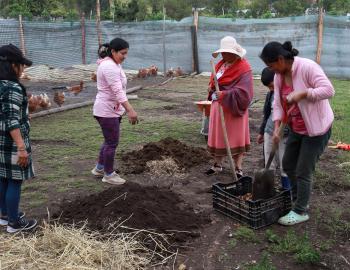
Promoting resilience and equality in local water management in Latin America

Environmental pressures—including land degradation, pollution, and climate change—have significantly constrained the capacity of natural watersheds in Latin America to provide clean water, leaving human populations increasingly vulnerable. To address these challenges, the CDKN Latin America (LATAM) regional programme, coordinated by Fundación Futuro Latinoamericano (FFLA), supports the Andean Water Funds Platform. This multi-actor governance space now brings together 12 Water Funds across Colombia, Ecuador, and Peru.

Active
Project
Active
Locally led adaptation: Priority area

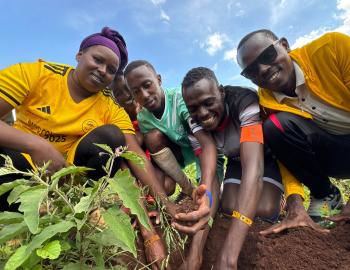
The risks faced by people and ecosystems in a changing climate vary from one locality to another. It’s partly a question of physical geography and partly a question of the human factors – social, economic, cultural – that make people resilient or vulnerable to climate hazards. That is why adaptation should be locally led. Adaptation is most effective when it is centred on people’s human rights and driven by the knowledge and needs that local people, especially the most marginalised groups, bring to the table.