
Promoting resilience and equality in local water management in Latin America
Promoting resilience and equality in local water management in Latin America
Overview of partnership with FFLA
Fundación Futuro Latinoamericano (FFLA) is CDKN’s regional partner in Latin America, coordinating the Andean Water Funds Platform across Colombia, Ecuador and Peru to strengthen climate resilience, water security and social equity. Through technical support, capacity strengthening, knowledge exchange and Knowledge-to-Action (K2A) grants, the partnership supports Water Funds, local organisations, Indigenous Peoples and communities to implement ecosystem-based adaptation (EbA) and gender equality and social inclusion (GESI) approaches, promoting locally led climate action, nature-based solutions, sustainable financing and inclusive watershed governance that improve both ecosystem health and livelihoods.
Regional context
Environmental pressures—including land degradation, pollution, and climate change—have significantly constrained the capacity of natural watersheds in Latin America to provide clean water, leaving human populations increasingly vulnerable. To address these challenges, the CDKN Latin America (LATAM) regional programme, coordinated by Fundación Futuro Latinoamericano (FFLA), supports the Andean Water Funds Platform. This multi-actor governance space now brings together 12 Water Funds across Colombia, Ecuador, and Peru.
The FFLA-CDKN objective in LATAM is to empower these Water Funds and their local partners to lead climate adaptation and Gender Equality and Social Inclusion (GESI) actions. By integrating Ecosystem-based Adaptation (EbA) and GESI into their core strategies, the programme enables Water Funds to transition from traditional water conservation toward integrated, climate-resilient models that address social equity alongside environmental health.
The programme has made significant strides in advancing these goals, principally through tailored technical accompaniment and "Knowledge-to-Action" (K2A) small grants.
Programme objectives
-
Strengthen the capacity of Water Funds, Indigenous and local communities, and local organisations within the Andean Water Funds Platform to lead climate adaptation with integrated GESI approaches.
-
Mainstream EbA and GESI into Water Fund strategies, governance, and operations to enhance climate resilience, water security, and social equity.
-
Promote sustainable financing and climate finance opportunities to ensure the long-term viability and scaling of Water Fund initiatives.
-
Expand integrated EbA and GESI interventions to reach more climate-vulnerable communities across priority watersheds in Colombia, Ecuador, and Peru.
-
Improve ecosystem health and water resource management through nature-based solutions that strengthen biodiversity, livelihoods, food sovereignty, and equitable governance.
-
Generate, document, and share evidence and knowledge from locally led EbA and GESI initiatives to support replication, policy influence, and regional scaling.
Programme activities
-
Coordinate and facilitate the Andean Water Funds Platform, fostering collaboration, peer learning, and knowledge exchange among 12 Water Funds across Colombia, Ecuador, and Peru.
-
Provide tailored technical assistance and Knowledge-to-Action (K2A) small grants to support the design and implementation of locally led EbA and GESI initiatives.
-
Strengthen the capacities of Water Funds, local organisations, and communities through training, mentoring, and technical accompaniment on EbA, GESI, locally led adaptation (LLA), and adaptive project management.
-
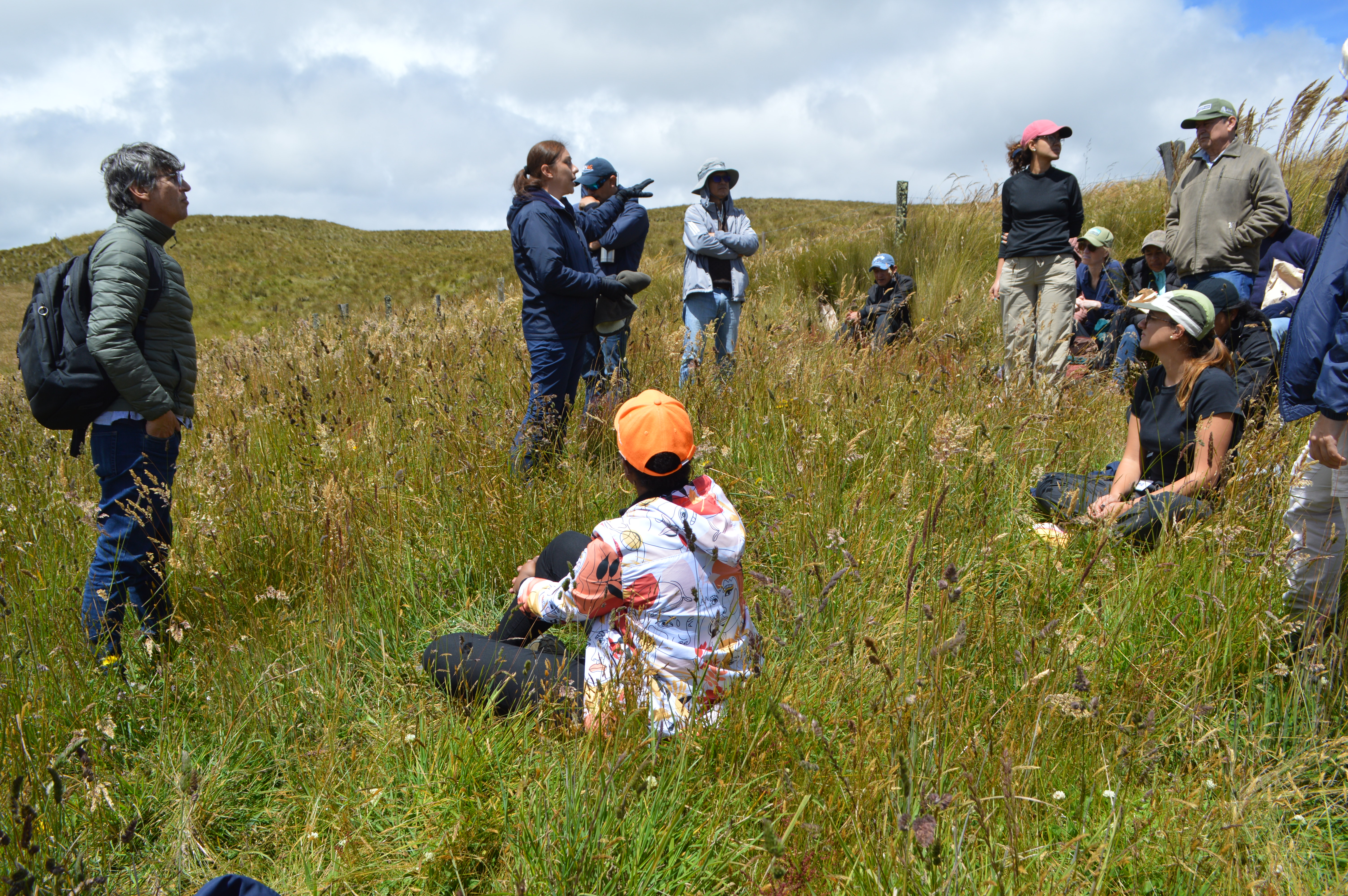
Support the co-design and implementation of community-led climate adaptation initiatives, including ecosystem restoration, agroforestry, sustainable livestock management, wetland conservation, and other nature-based solutions that enhance water security and livelihoods, integrating Indigenous and local knowledge of nature.
-
Facilitate participatory planning and governance processes that promote the meaningful engagement and leadership of women, youth, Indigenous Peoples, and other underrepresented groups in watershed management.
-
Build the institutional and technical capacity of Water Funds to access, manage, and scale climate finance through project development, proposal preparation, and donor engagement.
-
Mobilise new financial resources and strategic partnerships to expand integrated EbA and GESI interventions, including support for the implementation of climate finance secured through international cooperation.
-
Promote peer-to-peer learning through regional workshops, exchange visits, and communities of practice to disseminate successful adaptation models and lessons learned across the Andean region.
-
Provide ongoing technical advisory support through regular technical assistance, adaptive management processes, and continuous accompaniment to Water Funds and implementing partners.
-
Strengthen monitoring, evaluation, learning, and strategic planning systems to improve evidence generation, impact measurement, organisational performance, and long-term funding readiness.
-
Document and disseminate knowledge products, case studies, and practical tools to support the replication and scaling of integrated EbA and GESI approaches across the region and beyond.
"Knowledge-to-Action" (K2A) small grants
In 2023, FFLA and CDKN launched the ‘From Knowledge to Action’ programme to implement Ecosystem-based Adaptation (EbA) measures with a focus on gender equality and social inclusion (GESI).
The Programme involved work with Water Funds in Colombia (Cuenca Verde, Vivo Cuenca), Ecuador (FONAG, FODESNA) and Peru (AquaFondo, FORASAN) to collaborate, learn and build capacity. These Water Funds form part of the Andean Water Funds Platform.
Six projects were selected, each lasting between one and two years. These pilot projects have already conserved, restored, or enhanced the sustainable management of over 137 hectares, directly improving water access, food sovereignty, and livelihoods for more than 1,443 people.
-
Women Livestock Farmers, Caretakers of Ecosystems, with Cuenca Verde in Colombia
Five women leaders in the livestock sector in the Río Grande-Chico basin with strengthened capacities to implement Nature-based Solutions (NbS), focused on sustainable livestock practices and watershed protection.
-
Communities, forests and water for climate adaptation, with Vivo Cuenca in Colombia
Diverse representatives (women, youth, Indigenous Peoples) from seven communities in the municipality of Neira in the department of Caldas developed actions to protect water sources, promote natural forest regeneration, and diversify and rotate crops, highlighting their relationship with nature and the ecosystems around them.
-
Promoting the sustainability of the Amazonian Chakra as a mechanism for community climate adaptation, with FODESNA in Ecuador
The Kichwa and Kijus indigenous communities are promoting and revitalising the Amazonian Chakra Agroforestry System, adopting a GESI approach and carrying out restoration work using native Amazonian agroforestry species in more than 40 Amazonian chakras located near priority water sources and riverbanks.
-
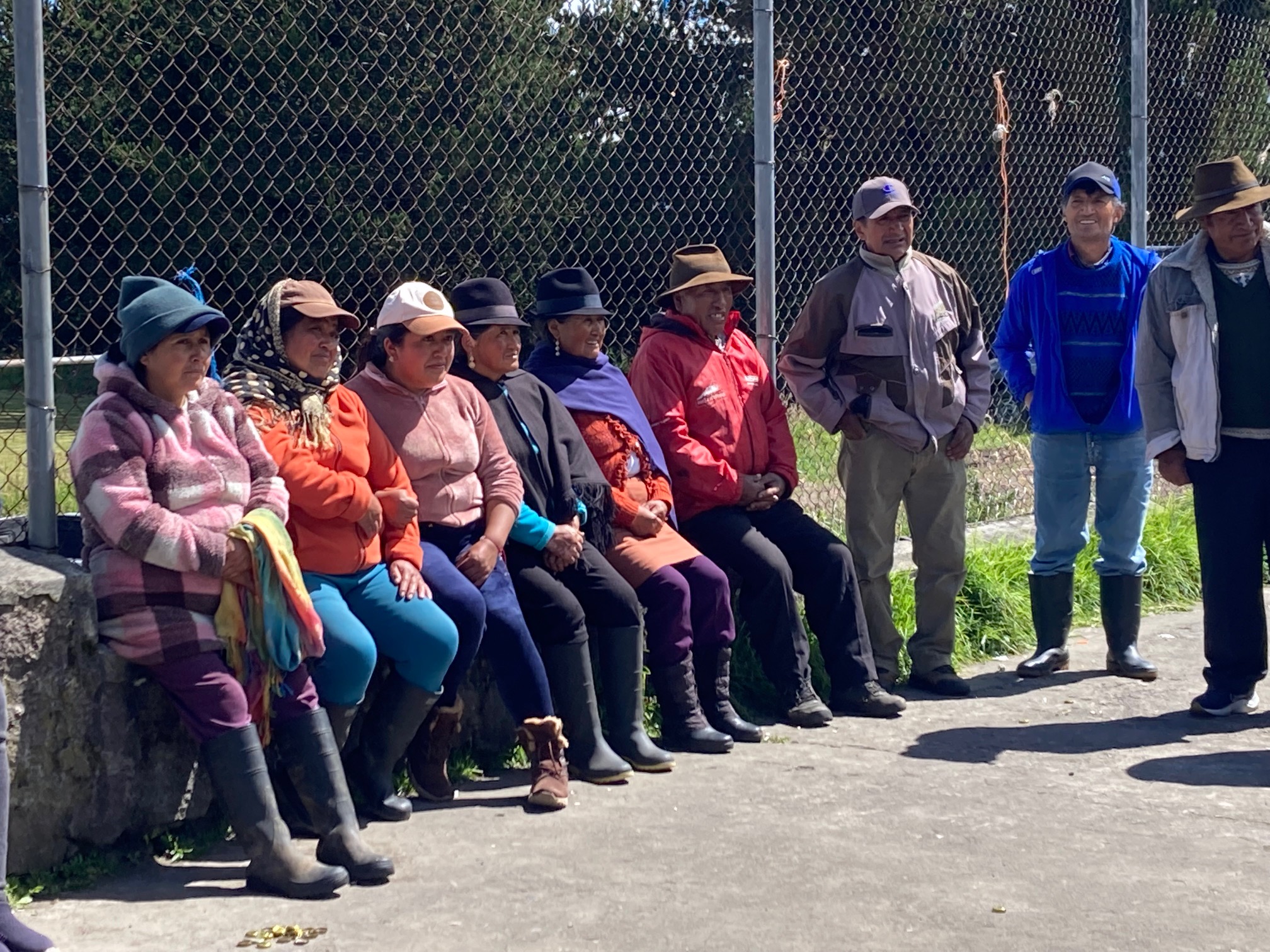
Resilience of production systems in paramo ecosystems vulnerable to climate change in two communities in the Mejía canton, with an equity-focused approach, with FONAG in Ecuador
The communities of Santa Ana and Loreto del Pedregal are implementing paramo conservation measures through initiatives for the efficient and intensive management of livestock pastures, ecological restoration, and rainwater harvesting. These actions incorporate cross-cutting processes of organisational strengthening, inclusive community leadership and communication.
-
Protection and conservation of the Yanasenega wetland, a millennia-old ecosystem located in the rural community of San Pedro de Casta that contributes to Lima’s water security, with Aquafondo in Peru
Installation of a perimeter fence around the Yanasenega wetland to prevent livestock from entering and to improve its water retention and infiltration capacity. These actions promoted women’s participation and leadership, as evidenced by the participatory formation of a wetland management committee comprising a woman from the community.
-
Ecosystem restoration using NbS a GESI approach in the Samanga Rural Community, with FORASAN in Peru
Installation of fencing in the Samanga Private Conservation Area (ACP) and revegetation of 25 hectares of cloud forest with native species through community work parties with equal participation of women, men and young people from the community. The actions included strengthening organisational capacities and women’s leadership, women’s meetings, exchanges of experiences and youth field schools.
Programme outputs
-
Driving equitable ecosystem-based adaptation: Lessons from water funds in Latin America
- Towards resilience and equity: FFLA-CDKN aligns with Latin America’s water funds
-
Four ecosystem-based adaptation projects with a social and gender perspective begin in Latin America
Contact
For more information, please contact info@ffla.net