Towards resilience and equity: FFLA-CDKN aligns with Latin America’s water funds
Towards resilience and equity: FFLA-CDKN aligns with Latin America’s water funds
This blog, by Paola Zavala and Karen Hildahl, explores the recent strategic pivot by FFLA–CDKN toward supporting water funds in Colombia, Ecuador, and Peru. It explains how these long‑term financing mechanisms harness inclusive, multi‑stakeholder governance to protect watersheds and drive equity‑focused climate adaptation.
In 2022, Fundación Futuro Latinoamericano (FFLA), the Climate and Development Knowledge Network (CDKN) regional coordinator for Latin America, made a strategic shift to focus the third phase of this programme on water funds—innovative financial mechanisms designed to protect water sources. After over a decade of working across various climate and development initiatives in the region, FFLA recognised the need for a more targeted, locally driven approach that could outlast CDKN’s direct involvement.
Water funds and how they work
Water funds are long-term (over 60-year), financial mechanisms that have led to proven environmental and social benefits in Latin America for the past 20 years. A water fund is established through financial contributions from water users who share a common challenge related to this resource. These contributors become the water fund’s constituents, responsible for setting guidelines and directing a technical secretariat to oversee its implementation. The technical secretariat serves as the operational unit, funding or executing on-the-ground activities. To ensure proper financial oversight, the water fund’s resources are managed by an independent third party, typically a trust, which guarantees that funds are used exclusively for their intended purpose. Through multi-actor governance spaces, local private sector, government, and community actors ensure the protection of water sources. Strategies include the implementation of conservation, restoration, and sustainable use measures as well as education, outreach, impact monitoring, reporting, accountability as well as gender and equity considerations.
In Latin America, ten water Funds in Colombia, Ecuador and Peru have aligned in an Andean Water Fund Platform, a community of practice, to share experiences and lessons towards improving the results of their strategies. FFLA has been supporting this process as the Technical Secretary of this space, facilitating learning and knowledge management among the water funds, with financial support from the Tinker Foundation. The ten water funds participating in the Andean Water Fund Platform are:
Colombia:
-
AguaSomos (Bogota)
-
Alianza BioCuenca (Cucuta)
-
Corporación Cuenca Verde (Medellin)
-
Corporación Vivo Cuenca (Manizales)
Ecuador:
-
Fondo de la Cuenca del Paute - FONAPA (Cuenca)
-
Fondo para la Protección del Agua - FONAG (Quito)
-
Fondo para el Desarrollo Sostenible y Conservación del Agua del Napo - FODESNA (Napo)
-
Fondo de Protección de Páramos y Lucha contra la Pobreza de Tungurahua-FMPLPT (Tungurahua)
Peru:
-
Fondo Regional del Agua -FORASAN (Piura)
-
Fondo para la Gestión Integrada del Agua en Tumbes – FONGIAT (Tumbes)
Linking CDKN’s strategic themes with FFLA’s support for the Andean Water Fund Platform
Building on its experience with water funds and the Andean Water Fund Platform, FFLA saw an opportunity with CDKN to enhance the sustainability of these mechanisms, ensuring they continue to drive long-term social and environmental impacts. Each water fund has its own context challenges, and specific needs aligned with CDKN’s themes, in particular finance, gender equity and social inclusion (GESI), ecosystem-based adaptation (EbA) and locally-led adaptation (LLA).
Recognising that water governance must be equitable and representative, FFLA and the water funds have been reinforcing a GESI approach within their interventions, highlighting and strengthening the inclusive practices already in place. While water funds have long been working to ensure that groups facing marginalisation—including women, Indigenous communities, and rural populations—have a voice in decision-making and access to conservation benefits, the water funds are making these efforts more intentional, visible, and integrated within broader sustainability strategies.
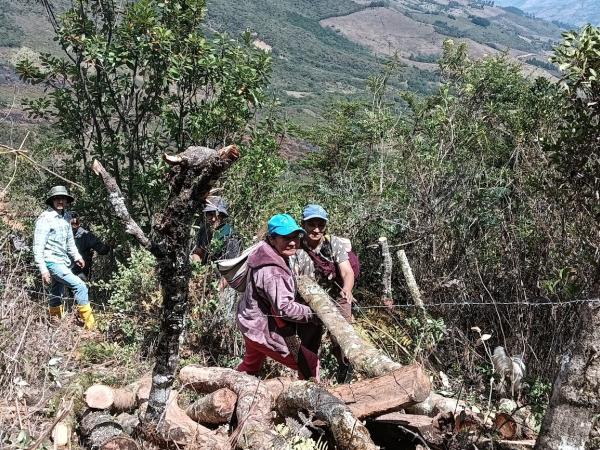
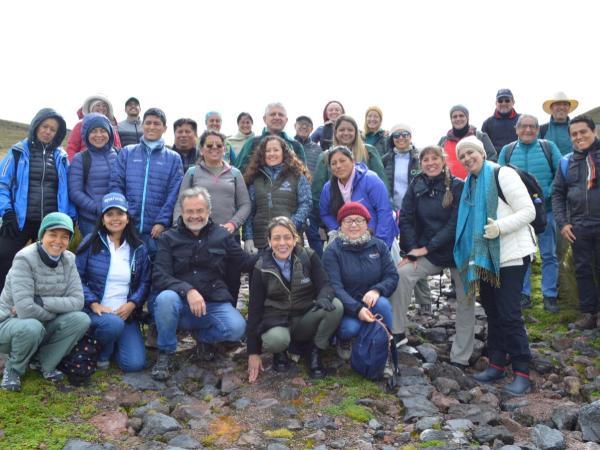
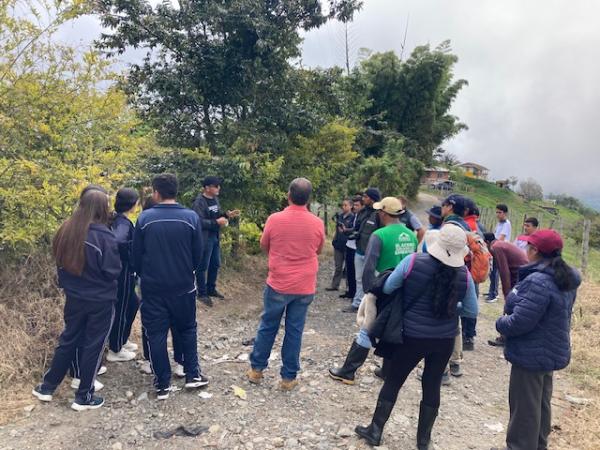
Moreover, the water funds have typically focused solely on water protection but find themselves in a changing world where climate change is impacting their actions in fragile ecosystems and local communities and other actor's dependent on water are ever more vulnerable. They have a keen interest in strengthening their ecosystem-based adaptation actions with a focus on gender equality and social inclusion. FFLA has been running a small-grants programme and a technical accompaniment process, strengthening capacities in GESI and EbA, and facilitating peer exchanges to learn from each other and improve the outcomes of water fund initiatives in Colombia, Ecuador and Peru.
In relation to finance for resilience, the water funds participating in the Andean Water Fund Platform have different levels of sustainability. The Quito Water Fund - FONAG, created 25 years ago, was the first in the world and has been successful in this regard, receiving large contributions from the Quito water utility. A key factor in FONAG’s success has been the long-term commitment of the municipal water utility, secured through a municipal ordinance mandating a two percent contribution of all revenue to the water fund. In addition to having secured funding from constituents, it is important to diversify funding sources ensuring a steady and reliable flow. Experience from various water funds has demonstrated that the continuity of contributions is more valuable than the amount. To ensure financial stability, regular, even small, contributions are more effective than one-time, large payments. This has been the key to success in the case of Quito’s water fund.
While this is the case for FONAG, most of the water funds participating in the Andean Water Fund Platform have substantial financial limitations and only reach a limited area of their catchment areas (estimated at about 20%) due to these constraints. The water funds need to attract new resources, particularly from private and public sector actors who have direct connections to the watersheds to ensure long-term contributions. This funding can be complemented with projects supported by international cooperation.
However, to achieve new funding and finance, the necessary enabling conditions must be in place. One challenge in this regard is the lack of effective monitoring, which limits the ability of water funds to communicate their efforts and demonstrate the social and environmental impacts achieved. As a result, water funds face greater difficulty in approaching potential funders with concrete evidence of the benefits of investing in their initiatives. Moreover, the water funds’ strategic planning needs to be aligned with their indicators and monitoring systems. FFLA is working to create the enabling conditions necessary for water funds to attract more funding and increase the scope of their successful and innovative actions to promote greater resilience and equality in the region.
Focusing on water funds in watersheds where strong local partnerships are already in place means supporting initiatives with real staying power. This shift reinforces FFLA-CDKN’s commitment to locally-led action, and aligns and integrates multiple efforts, bringing together climate resilience, water availability, long-term engagement in water governance, and gender equality and social inclusion. Water funds have enormous potential to bridge financial sustainability, environmental stewardship and social inclusion in Latin America. Embedding inclusivity and resilience into the heart of water funds, helps shape a future where access to water is both environmentally and socially just.