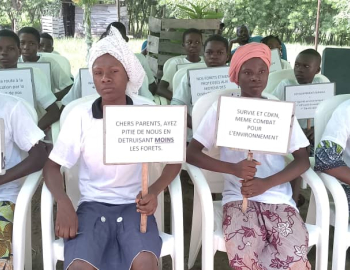
Stewarding nature through culture: Lessons from Indigenous knowledge systems for biodiversity protection in Benin
Stewarding nature through culture: Lessons from Indigenous knowledge systems for biodiversity protection in Benin
Forests and biodiversity-rich landscapes in Benin are not only ecological assets; they are entangled with cultural realities, belief systems, and knowledge traditions. Yet, the value of these knowledge systems is not always captured in conventional approaches to natural resource governance.
The “Revitalising Biodiversity by Drawing on Traditional African Knowledge in Central Benin” project, implemented by SURVIE NGO in Central Benin, under the CDKN Knowledge-to-Action (K2A) programme, sought to change this narrative. Over the past two years, the project has promoted the integration of local and Indigenous Knowledge systems into biodiversity conservation agendas. Anchored in the ongoing locally led adaptation paradigm, the initiative aimed to create a space for local communities to lead sustainable and effective adaptation to climate change.
This blog highlights key lessons and best practices observed in SURVIE NGO’s project, providing a roadmap for scaling locally led natural resource governance to support climate resilience and biodiversity restoration.
Indigenous knowledge is an essential fuel for climate resilience.
Over generations, spiritual beliefs, customary rules, and wisdom have played a key role in the conservation of sacred forests and ecosystems in Benin. SURVIE NGO’s project demonstrates that integrating different knowledge systems in the management of sacred forests has proven effective in sustaining biodiversity and promoting natural resource conservation. Indigenous knowledge is the result of generations of observation, experimentation, learning, adaptation, and environmental stewardship. Embedded in socially constructed practices, Indigenous and local knowledge systems contribute to protecting ecosystems and services that communities rely for their livelihoods.
Therefore, Indigenous and local knowledge systems should be regarded as dynamic systems of environmental governance, rather than solely as aspects of cultural heritage. When properly recognised and integrated, these cultural governance systems can complement formal conservation mechanisms and enhance environmental management.
Knowledge co-production builds trust and legitimacy.
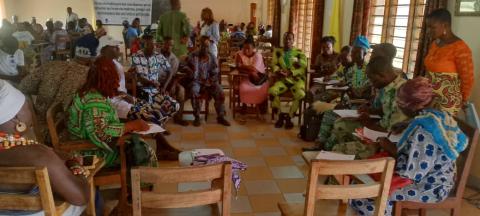
The project activities focused on "knowledge co-production." Through multi-stakeholder dialogues involving traditional leaders, community members, government representatives, and scientists, the project provided a platform for participants to express their perspectives. This dialogue platform became a safe space for local communities, including vulnerable groups such as women, youth, and individuals with disabilities, to contribute to the design of solutions that address their needs and aspirations. As the project progressed through multiple co-production sessions, stakeholders developed trust and legitimacy. For instance, successive dialogues enabled traditional leaders and forest officers, previously in conflict, to agree on collaboration. As trust increased, leaders became willing to share their “protected” local knowledge with forest officers, facilitating more effective resource management.
This experience demonstrated that recognising communities as partners, rather than solely as beneficiaries, results in more relevant and credible solutions. It also indicated that successful knowledge-to-action processes depend on mutual learning, with diverse actors contributing their expertise and experiences.
Improving community livelihood through biodiversity conservation
Another key lesson from the project is that community accountability for conservation efforts increases when these initiatives are connected to livelihood strategies and local economic opportunities. The project demonstrated that biodiversity conservation, which generates tangible economic benefits encourages communities to become active partners in sustaining their ecosystems. For example, the sale of indigenous seedlings with cultural, medicinal, or economic value provides additional resources for community nursery associations.
As sacred forest regeneration activities progressed, forest custodians identified priority species based on their local knowledge of plants’ medicinal and spiritual values. These initiatives not only created income for community-based nursery associations but also strengthened local incentives for biodiversity conservation. A traditional healer, whose livelihood depends on access to medicinal species, explained: “I am very much interested in this initiative because the tree planting activities are restoring and protecting species I use to heal in the community”.
Mainstreaming Indigenous Knowledge for conservation is promising but challenging.
The project created momentum for integrating Indigenous Knowledge into local development and biodiversity planning processes. Engagement with local partners has opened new opportunities to explore how traditional knowledge systems and cultural practices can inform environmental governance and strengthen conservation strategies. Indigenous ecological knowledge proved particularly valuable for identifying culturally significant species such as Iroko (Milicia excelsa), Obeche (Triplochiton scleroxylon), and Kapok tree (Ceiba pentandra).
However, mainstreaming Indigenous Knowledge into formal governance systems remains challenging. Persistent barriers include limited financial and institutional capacity and gaps in the formal recognition of Indigenous Knowledge. These experiences highlight the need for sustained dialogue, institutional support, and collaboration between local and national actors.
A further challenge involves the governance and protection of Indigenous Knowledge. Issues related to knowledge ownership, intellectual property rights, access, and use conditions remain insufficiently addressed in many development initiatives. Communities often express concerns about who can document, share, or commercialise their knowledge and under what conditions researchers, government institutions, or private actors can use it. Without clear safeguards, there is a risk of misuse or appropriation of Indigenous Knowledge without prior, informed consent from knowledge holders or without a fair recognition and benefits-sharing mechanism. Strengthening legal and policy frameworks that protect community rights over their knowledge, while enabling respectful knowledge exchange between Indigenous and scientific systems, will be essential for ensuring that Indigenous Knowledge contributes sustainably and ethically to biodiversity conservation and local development.
Way forward
The K2A project in central Benin highlights the importance of revaluing Indigenous Knowledge as a powerful tool for addressing biodiversity losses. By bridging different knowledge systems, empowering local communities, and fostering dialogue between science, policy, and culture, the initiative demonstrates that Indigenous Knowledge plays a central role in building resilient landscapes and societies.
As climate and biodiversity challenges intensify, strengthening partnerships that recognise and support diverse knowledge systems will be increasingly important. The lessons learned from K2A remind us that sustainable solutions often emerge when we listen to local voices, value traditional wisdom, and work collectively to translate knowledge into action.
Read more of SURVIE’s work:
-
Feature article: Bridging Indigenous and Western knowledge systems for inclusive forest-based resilience in Benin, 2025