Traditional knowledge driving local-scale business and biodiversity conservation in Central Benin
Traditional knowledge driving local-scale business and biodiversity conservation in Central Benin
Climate adaptation and biodiversity conservation are increasingly shaping Benin’s national environmental agenda, yet translating high-level commitments into effective, locally grounded action remains a central challenge. In Central Benin, centuries-old systems of traditional forest stewardship are demonstrating how community knowledge can bridge this gap, delivering conservation outcomes while strengthening local livelihoods and business opportunities.
Benin’s National Adaptation Plan highlights the need to strengthen forest protection, restore degraded ecosystems, and conserve biodiversity, including through the reintroduction of endemic and threatened species. Similarly, the country’s Nationally Determined Contribution (NDC) commits to establishing 15,000 hectares of plantations annually between 2021 and 2030 to enhance carbon sequestration and reduce greenhouse gas emissions. The country’s previously submitted National Biodiversity Strategy and Action Plan also envisions, by 2050, a country where biodiversity is valued, conserved, restored, and sustainably used, to maintain ecosystem services. Achieving these ambitions, however, depends not only on technical solutions but also on approaches that align with local values and knowledge systems.
Central Benin offers a compelling example. The region is home to a remarkable diversity of sacred forests, each embedded within distinct cultural, spiritual, and social practices. Some forests are dedicated to deities and serve as spaces for rituals. Others are reserved for secret societies and initiation ceremonies. Sacred forests are managed for spiritual purposes, while cemetery forests protect ancestral burial sites, maintaining a living connection between past and present generations.
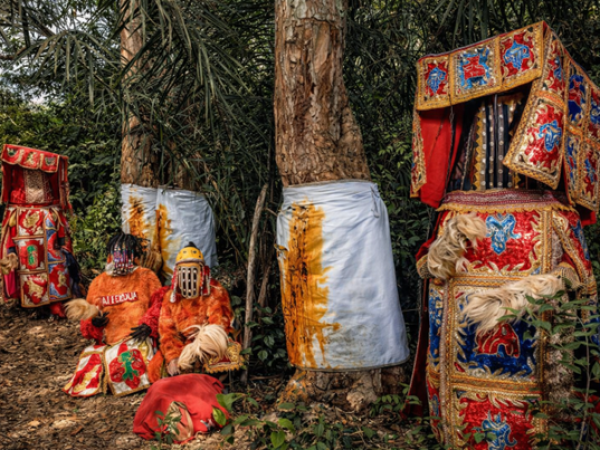
These forests are not only cultural sanctuaries; they are also vital ecological reserves. They play a crucial role in conserving local biodiversity and embody centuries of traditional ecological knowledge, often expressed through songs, proverbs, and customary practices. This rich cultural-ecological landscape forms the foundation of SURVIE NGO’s knowledge-to-action project, “Revitalising Biodiversity by Drawing on Traditional African Knowledge in Central Benin.”
Community resilience strengthened through intergenerational knowledge sharing
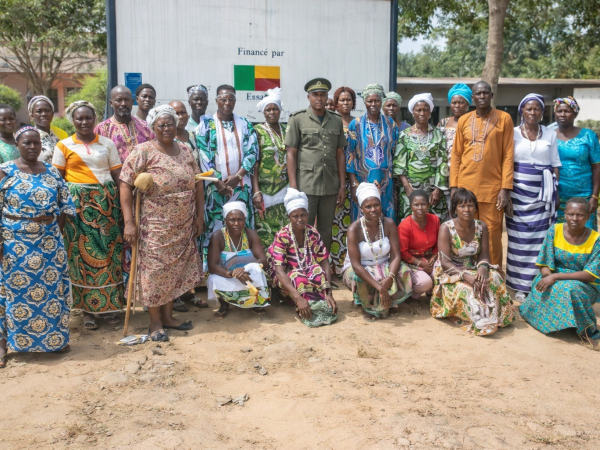
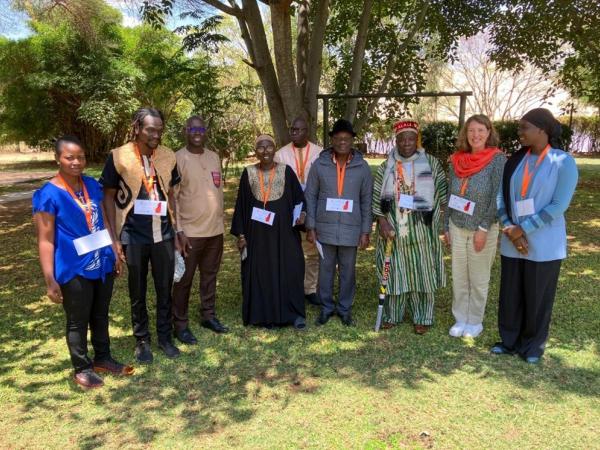
One of the project’s core contributions lies in strengthening community resilience by recognising traditional knowledge. Acknowledging sacred forests as living systems of knowledge, SURVIE NGO has created opportunities for traditional knowledge holders to share their expertise beyond their home communities. Custodians of sacred forests and traditional healers engaged with forest administration staff, policymakers, researchers, and international audiences to discuss the sustainability of sacred forests–based knowledge systems. This exposure enhances their visibility and affirms the legitimacy of traditional knowledge systems within contemporary conservation efforts.
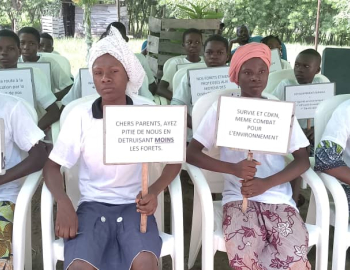
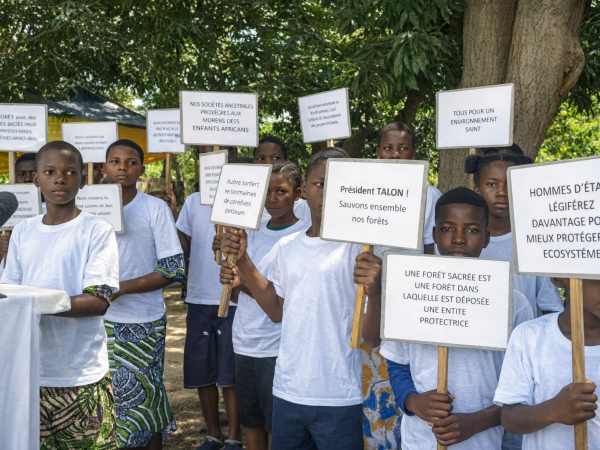
The project has also invested in intergenerational knowledge exchange by engaging children and young people, including students, in awareness-raising and tree-planting activities that promote appreciation of ancestral ecological knowledge. This long-term investment helps institutionalise cultural heritage as a pillar of biodiversity conservation and will contribute to the emergence of a new generation of environmentally responsible community actors.
Locally-led adaptation in practice
The project operationalises locally-led adaptation by placing communities at the centre of forest enrichment and related decision-making. Sacred forests in the project area have distinct characteristics, identities, and functions that shape their social representation, as each is linked to particular ethnic groups, spiritual deities, and customary practices. As such, SURVIE NGO has created space for communities to articulate their priorities regarding the forest resources they need. During the planning of tree-planting activities, forest custodians recommended priority species based on traditional knowledge of medicinal, spiritual, and deity-associated plants. This ensures that tree-planting efforts are directly aligned with local aspirations and strengthens community ownership and incentives to protect trees.
Tree planting as a nature-based livelihood and economic opportunities
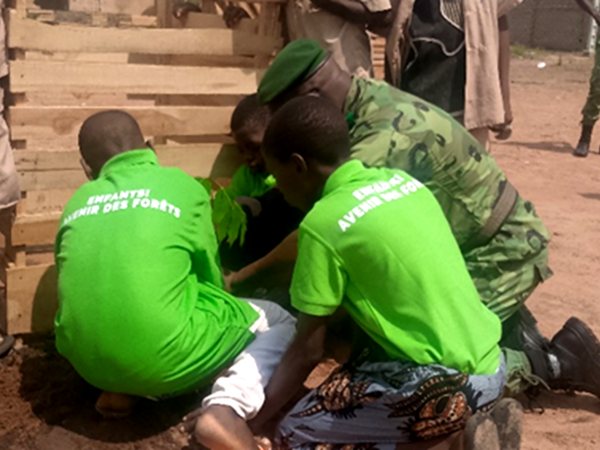
The regreening of sacred forests has created new income opportunities for community-level economic development and strengthened local small-scale entrepreneurship. This includes: community-based nursery associations engaged in seedling production in project localities; local women are hired to water the 2487 newly planted trees across the six districts; carpenters engaged to construct protection structures for the planted trees; and local transporters. The demand for specific indigenous species with medicinal, nutritional, and cultural value has encouraged nursery groups to diversify their production. It has increased the production of neglected or endangered species, such as Iroko (Milicia excelsa), Noni (Morinda citrifolia), African afzelia (Afzelia africana), Triplochiton scleroxylon, and kapok (Ceiba pentandra), with species numbers doubling in some areas and tripling in others.
Through project interventions, communities acquire new technical and entrepreneurial skills that strengthen their livelihoods while addressing conservation needs. Representatives from community-based nursery associations reported that they have produced and sold up to XOF 800,000 in seedlings for the enrichment of sacred forests during 2024 and 2025. A member of the association explains that “[...] this income opportunity has supported women and young people in our association”.
Improved local governance and collaboration
A significant shift in relations has occurred between local communities and the forest administration. Historically, forest officers have been associated with repression and not perceived as partners. SURVIE NGO’s approach has helped to break this long-standing mistrust by creating safe spaces for dialogue and collaboration. Traditional knowledge holders and forest agents have now recognised their shared objectives for natural resource conservation: "[...] the dialogues have changed perceptions on both sides. The administration better understands our traditions, and we better understand their role."
The renewed trust has strengthened long-term stewardship of sacred forests. It has also reinforced collective responsibility for maintaining planted species and protecting the forests. As residents observe the growth of planted species, they feel more invested in protecting forests.
This experience offers important lessons for implementing Global Biodiversity Framework Target 22 in other contexts. In particular, inclusive, context-grounded dialogues between authorities and local communities are essential for meaningful participation and joint responsibility in biodiversity conservation.
The culturally grounded practices are known to be reliable, as one local priest explained, “[...] in sacred forests, those who intend to act illegally know that the guardians are not visible. They are spiritual ... When someone violates the forest, the spirits may cause them to lose their way...” Local administrations recognise that traditional conservation techniques can reduce public expenditure on forest management and surveillance. Moving forward, SURVIE NGO is pursuing various lobbying activities to mainstream traditional knowledge for forest conservation in the National Forest Code.