Championing inclusive climate action in Addis Ababa: Lessons from Ethiopia’s gender and climate change community of practice
Championing inclusive climate action in Addis Ababa: Lessons from Ethiopia’s gender and climate change community of practice
Ethiopia has maintained a strong commitment to addressing climate change and advancing the goals of the Paris Agreement. Over the past fifty years, the country has experienced increasing climate impacts, such as food insecurity risks, pressures on natural resources, and threats to livelihoods, underscoring the need for robust adaptation and resilience strategies.
Despite national ambition, a 2019 CDKN-supported scoping study and the Climate Resilient Green Economy (CRGE) Facility’s gender framework revealed the fragmented state of gender integration across climate initiatives in the country.
Recognising this gap, national stakeholders identified the need for coordinated capacity strengthening efforts and a shared platform to strengthen gender-responsive approaches in climate action.
Establishing a platform for gender-responsive climate action
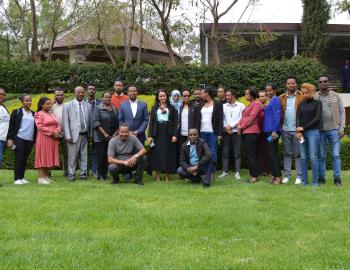
In response, the Community of Practice (CoP) for Gender Equity and Social Inclusion (GESI) in climate change was established in December 2020 by the CRGE facility in collaboration with sector ministries. Following a government restructuring in 2023, which mandated the Ministry of Planning and Development (MoPD) to coordinate Ethiopia’s climate agenda, MoPD and the Ministry of Women and Social Affairs were nominated as co-chairs for the CoP. as co-chairs for the CoP.
That same year, further steps were taken to strengthen inclusivity by formally inviting youth-led initiatives to join the platform. Today, the GESI-CC CoP brings together focal persons from climate, environment, and gender units across sector ministries, youth groups and civil society organisations. The CoP serves as a collaborative space to strengthen capacity and promote the systematic integration of gender considerations across Ethiopia’s climate policies and programmes.
From dialogue to action: strengthening capacity of members
Since its first meeting in 2021, the GESI-CC Community of Practice (CoP) has been at the heart of efforts to strengthen the integration of gender equity and social inclusion (GESI) in Ethiopia’s climate response. Between 2021 and 2022, GESI-CC training modules to support Ethiopian practitioners were developed by CDKN and shared with government counterparts. Through the CDKN Ethiopia programme, and in collaboration with the Government of Ethiopia and other partners, the CoP has steadily evolved into a platform that builds knowledge, dialogue, and leadership in GESI-responsive climate action.
A major milestone in this journey has been the delivery of two rounds of, demand-driven, tailored training for CoP members in 2024. This was followed in 2025 by an in-depth training of trainers (ToT) programme for those aspiring to become facilitators themselves. Six participants, from Ministry of Urban and Infrastructure, Ministry of Planning and Development and youth-led initiatives – Enfluencers and Ethiopian Women and Youth Climate Assembly (EWYCA) successfully completed the ToT delivered by CDKN. This marked a pivotal step towards building a self-sustaining network capable of independently delivering high quality GESI-CC capacity strengthening across sectors.
Localised tools and growing ownership
The ToT was built on CDKN’s GESICC training modules, first developed in 2021, then updated in 2024 to reflect evolving national and international priorities. Adapted to the Ethiopian context and translated into Amharic, the modules enable ministries and stakeholders to engage more effectively with GESI concepts and tools more effectively.
Following the ToT, newly trained facilitators, two youth groups, and the Ministry of Urban and Infrastructure, organised and delivered two independent training sessions, marking a major step toward local ownership.

The first of these trainings led by Enfluencers and EWYCA in October 2025 targeted youth groups and university students in Addis Ababa. The session aimed to equip young people working in climate action and policy advocacy with practical GESI tools and real-world examples of GESI‑ responsive climate initiatives [see video].
“We are able to pass what we learned through the GESI-CC training to many of our peers... It was inspiring to hear how participants plan to implement what they have learned. We hope to see climate actions and policies being more inclusive and equitable in Ethiopia”
- Ilham Mohammed, Enfluencers
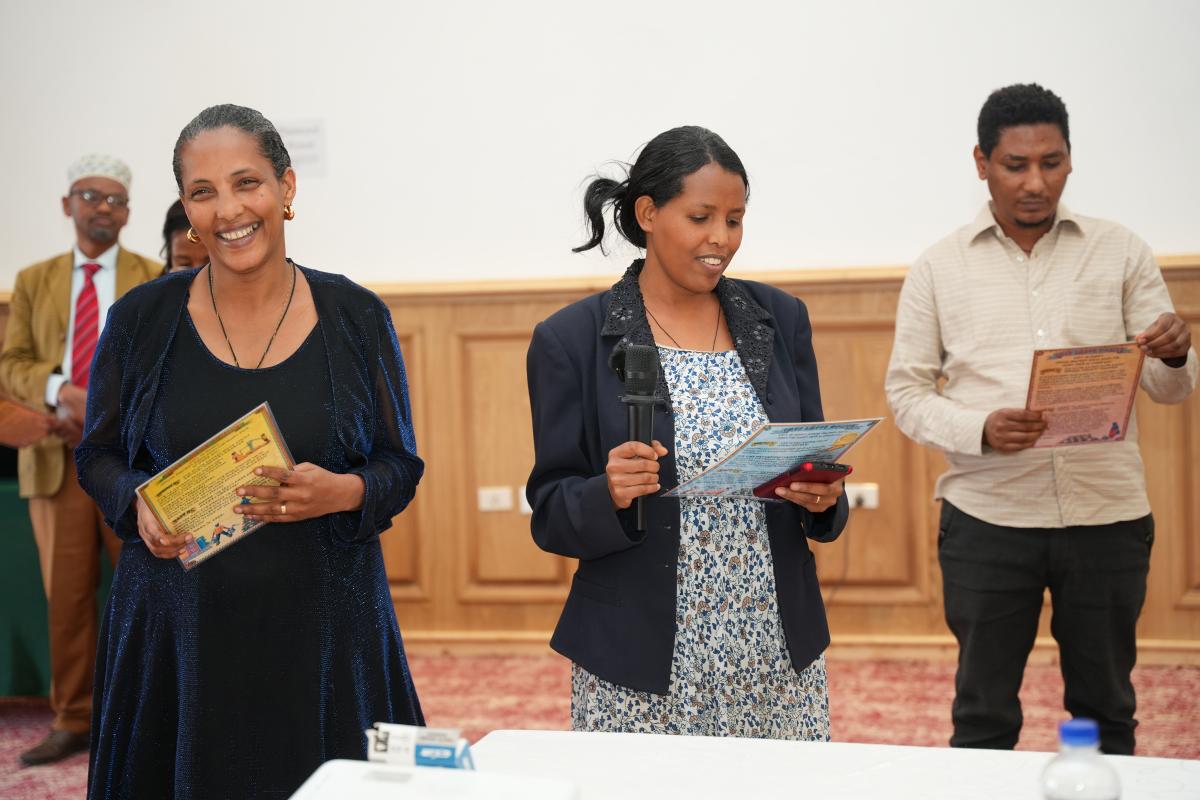
“As a young expert in climate and environmental protection, I was limited in my understanding of how to apply a GESI lens in our work. This training has transformed my day-to-day engagement in program development and policy advocacy”
- Jodahi Bezabih, Enfluencers
Institutional change in practice
The second training was organised in November 2025 by the Ministry of Urban and Infrastructure (MOUI) for its departmental heads and senior experts. It demonstrated the growing institutional demand for GESI integration and increasing confidence among CoP members to lead change within their organisations.
The participants agreed on concrete actions to integrate gender indicators into the Ministry’s planning and monitoring systems. As a result, the Ministry updated its Key Performance Indicators, incorporating GESI indicators under two outcomes. These include tracking the percentage of women and people with disabilities homeowners in urban housing development, as well as women and people with disabilities owning land under the urban land administration and registration system.
“What we have achieved today will support our Ministry immensely in shifting our initiatives to be intentionally inclusive. We will continue building capacities to ensure everyone in our institution has a good understanding of the importance of GESI mainstreaming in climate actions”
- Rukia Seid, MoUI
Looking ahead
Additional trainings led by the Ministry of Transport and Logistics and Ministry of Planning and Development are planned for 2026, further extending GESI integration in climate action across CoP member ministries. These milestones signal an important shift, from external facilitation to nationally owned and driven capacity strengthening.
As CoP members step confidently into trainer and leadership roles, Ethiopia’s climate sector is becoming better equipped to design and implement initiatives that are inclusive, context appropriate, and responsive to the needs of those most affected by climate impacts.
For more information, visit the CDKN Ethiopia project page.