Seeds of resilience: How community seed systems are advancing LLA in Africa
Seeds of resilience: How community seed systems are advancing LLA in Africa
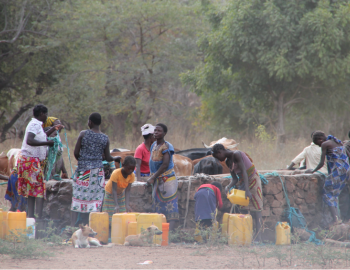
Across Africa, climate change is placing growing pressure on food systems. Rising temperatures, erratic rainfall and more frequent extreme weather events are making it harder for small-scale farmers to produce food, while biodiversity loss, environmental degradation and dependence on commercial agricultural inputs are increasing vulnerability. Strengthening food systems that are locally led, resilient and adapted to changing conditions has never been more important.
One promising approach is emerging through community seed systems. Micaia Foundation, one of CDKN's Knowledge to Action (K2A) grantees, is working with communities in Mozambique's Manica Province to strengthen community-managed seed banks that conserve locally adapted seed varieties, protect Indigenous and local knowledge, and improve resilience to climate change. Their experience shows how locally led adaptation can strengthen food sovereignty by combining community knowledge with scientific expertise while keeping local people at the centre of decision-making.
Seeds as knowledge, not just inputs
For many rural communities, seeds are far more than agricultural inputs. They embody generations of knowledge about soils, rainfall, pests, seasons and local food cultures. In Manica Province, where most households rely on rain-fed agriculture, locally adapted seeds are not only a source of autonomy but also a vital safety net.
When droughts, erratic rainfall or cyclones destroy harvests, families often lose both their food supply and the seed needed for the following season. Conserving indigenous seed varieties helps break this cycle. Selected over generations, these varieties are often better able to withstand drought, pests and changing rainfall patterns than commercial alternatives, while preserving valuable genetic diversity.
Through community seed mapping, farmers identify which varieties still exist, which have been lost and which are most important for local livelihoods, nutrition and culture. Communities also identify native species for restoring springs and riverbanks, helping ensure ecosystem restoration is guided by those with the deepest understanding of local landscapes.
Community-led seed banks in practice
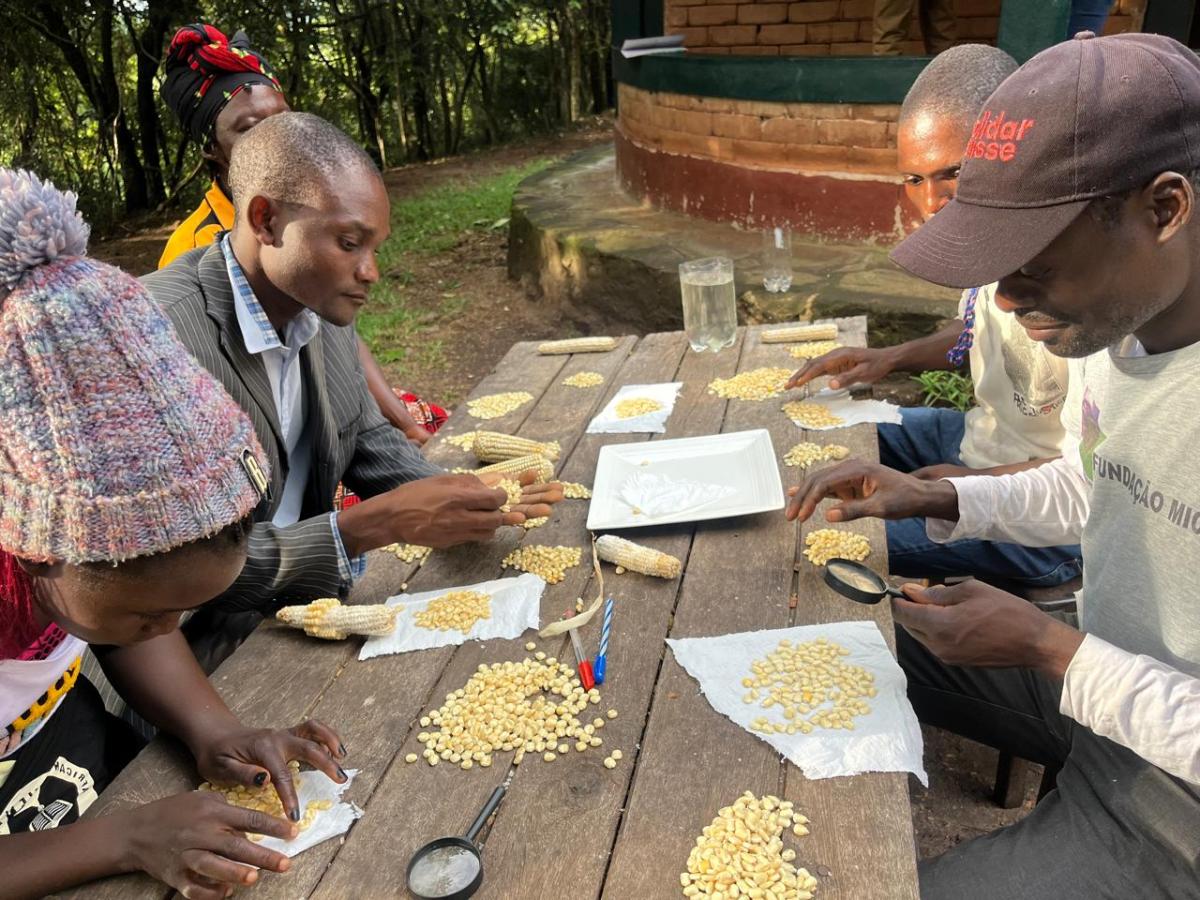
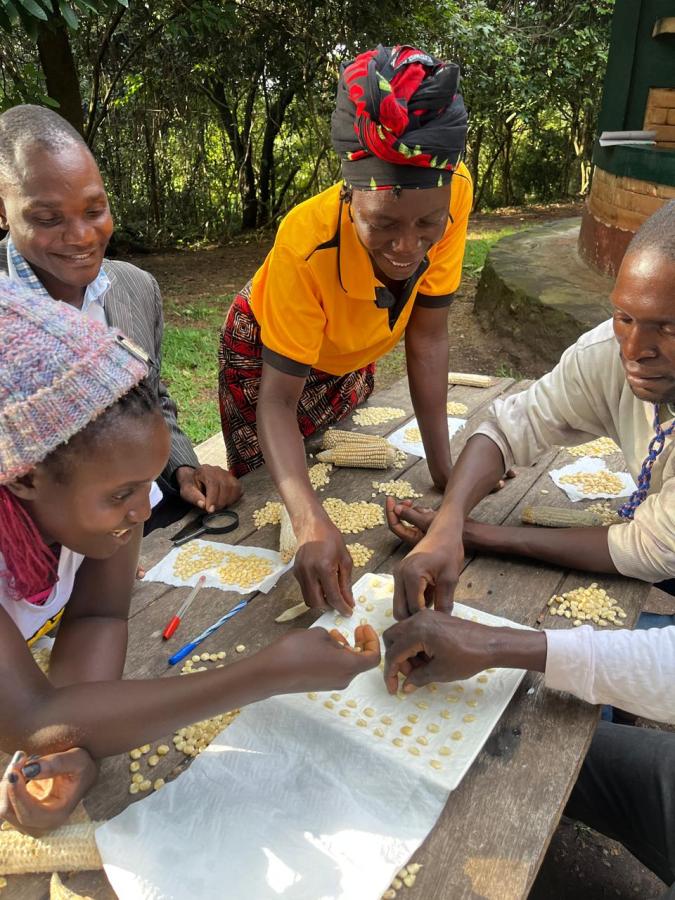
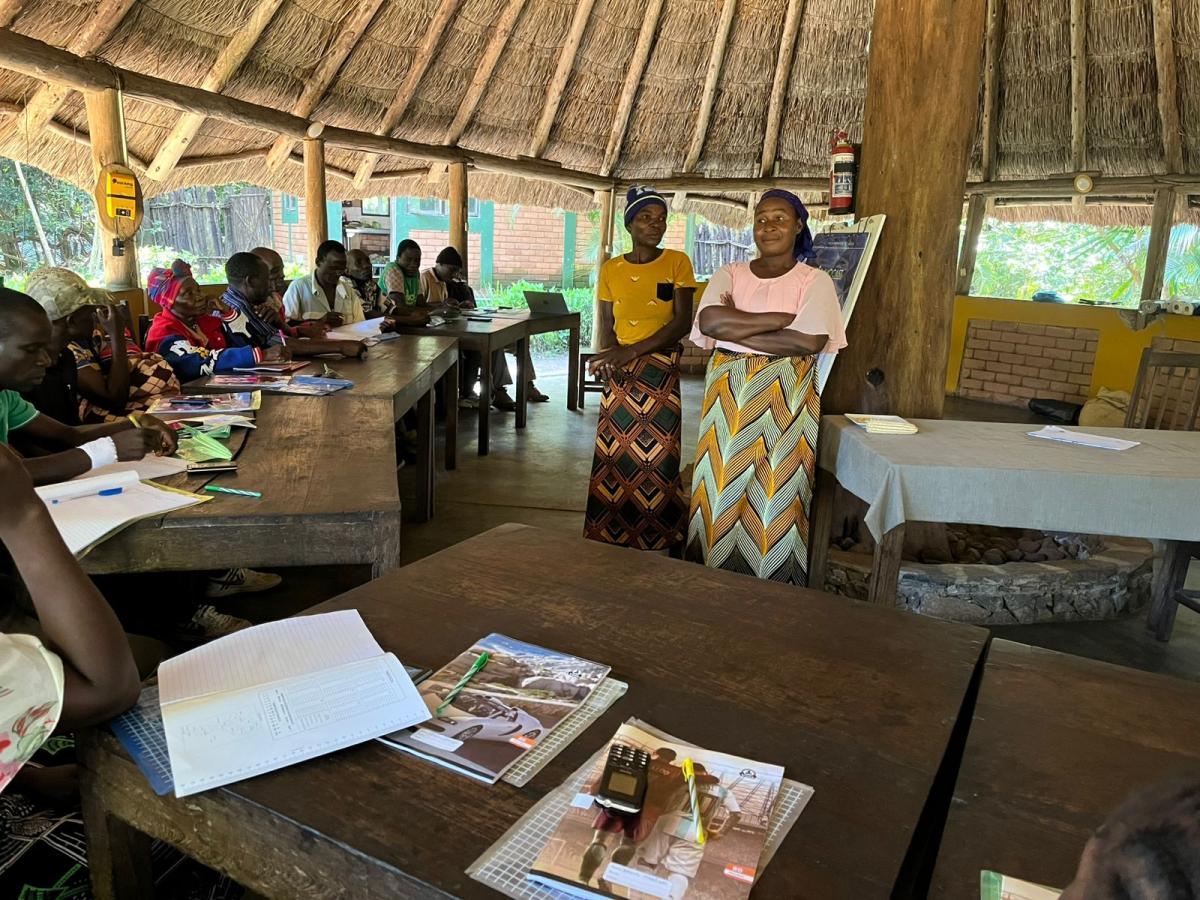
Micaia Foundation builds on existing community knowledge rather than introducing entirely new approaches. Its community-managed seed banks function as living systems, supporting food security, ecosystem restoration and local livelihoods. Through agricultural fairs, seed exchanges and learning sessions, farmers identify, test, conserve and share locally adapted seed varieties while passing knowledge between generations. The organisation also engages young people through school-based environmental education, helping build the next generation of environmental stewards.
These practices continue to evolve through collective learning. During a community discussion in Manica Province, one participant asked: "Is seed mapping about identifying different seed varieties, or mapping where and how seeds are planted?" The question captured the purpose of the process. Seed mapping enables communities to identify which varieties remain, which have been lost over time, and which are most valuable for local livelihoods, nutrition and culture. Rather than simply documenting biodiversity, it helps communities make informed decisions about farming, conservation and ecosystem restoration.
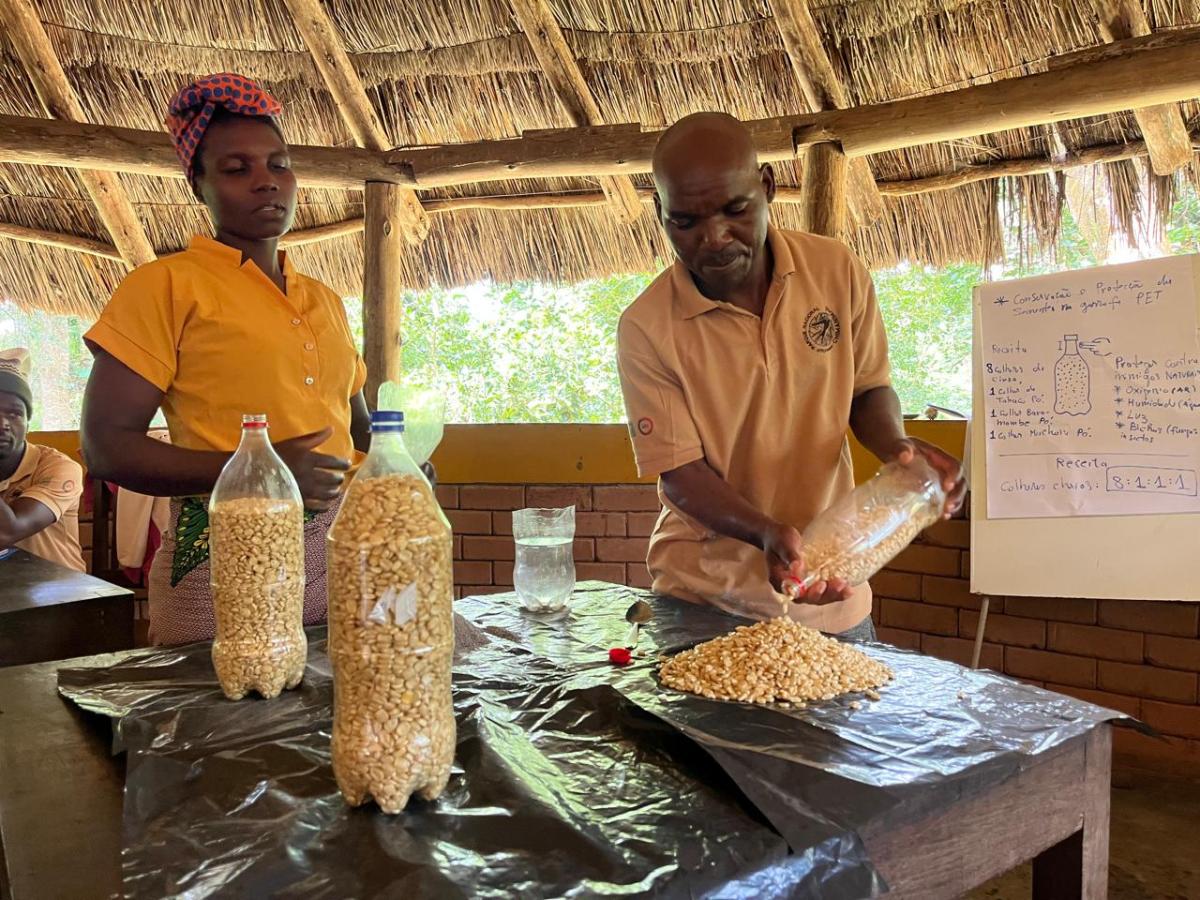
Community seed banks are central to this process. Rather than acting as static storage facilities, they serve as shared learning spaces where practical knowledge is tested and applied. Farmers use techniques such as flotation tests to assess seed viability, germination trials and low-cost storage methods using locally available materials, including ash, plant leaves and repurposed PET bottles as hermetic containers. By conserving seeds locally, communities reduce their reliance on fragile supply chains and volatile input markets while strengthening trust, collective ownership and local decision-making.
Bridging knowledge systems
A defining feature of Micaia's approach is its role as a knowledge broker, connecting communities with researchers and government technical specialists while ensuring local priorities remain at the centre of decision-making. Through the Learning for Resilience project, Micaia facilitated collaboration with institutions including Zambeze University and technicians from Chimanimani National Park, responding to community needs rather than imposing external solutions.
This collaboration strengthened community seed-saving practices through technical support on seed selection, conservation and storage, while communities retained ownership of the process. For example, researchers helped farmers recognise that selecting seed for the next season begins while crops are still growing in the field. Identifying healthy, resilient plants before harvest improves the quality of seed saved for future planting and strengthens long-term adaptation.
To extend this knowledge, 52 community members were trained as Trainers of Trainers (ToTs), creating a network of local facilitators who now lead learning within their own communities. By June 2026, training had been replicated in 15 of the 19 target communities, reaching 340 participants, including 196 women and 144 men. Women's strong participation reflects their long-standing role as custodians of local seeds and agrobiodiversity. Rather than creating new leadership structures, the project recognised and strengthened responsibilities that women already hold in seed selection, storage and food preparation. At the same time, Micaia's work with schools is helping ensure that local ecological knowledge is passed to younger generations.
This is locally led adaptation in practice. External organisations contribute demand-led technical expertise, research and facilitation, but communities retain control over decisions about their seeds, farming systems and natural resources. The result is not simply improved seed conservation, but stronger local institutions, greater community capacity and collaboration and more resilient food systems.
From local action to regional learning
Locally led does not mean unsupported. Strong partnerships between communities, researchers and local institutions can strengthen adaptation while ensuring that decision-making remains firmly in community hands.
In Manica Province, scientific expertise complemented rather than replaced local knowledge. Research institutions and conservation authorities contributed technical guidance on seed conservation and quality, while communities determined how that knowledge would be applied within their own farming systems. This combination of local leadership and external support has helped strengthen food security, biodiversity and resilience to climate change.
These lessons extend beyond Mozambique. Across Africa, farming communities face many of the same pressures, including climate change, biodiversity loss, market dependence and restrictive seed governance. In southern Tunisia, for example, farmers continue to conserve locally adapted seed varieties to cope with water scarcity, soil salinisation and rising temperatures. Yet without supportive policies, financing or research partnerships, these efforts often remain informal and under-recognised. The challenge is rarely a lack of local knowledge. Rather, it is whether institutions recognise and invest in it.
Networks such as the Alliance for Food Sovereignty in Africa and Seed Savers Network provide important opportunities for communities, researchers and civil society organisations to exchange experiences and strengthen farmer-managed seed systems across the continent. While each context is unique, peer learning can help communities adapt successful approaches without losing sight of local priorities.
Looking forward
Community-led seed systems demonstrate that climate resilience is built through everyday practices, collective learning and local leadership. They show that strengthening food sovereignty is not simply about conserving seeds, but about supporting the knowledge, relationships and governance systems that allow communities to adapt on their own terms.
As climate pressures intensify, protecting locally adapted seed varieties will become increasingly important for food security, biodiversity and resilient livelihoods. Mozambique's experience offers a practical example of how traditional knowledge, scientific expertise and responsive institutions can work together without displacing community ownership.
These questions will continue to shape discussions across Africa as practitioners, researchers and policymakers explore how community-led seed systems can be supported while remaining locally governed. They will also be explored further during CDKN's upcoming global webinar series, where we will have a dedicated session on food sovereignty and locally led adaptation, bringing together partners from across the continent to share experiences and lessons for building more resilient food systems.