From inclusion to influence: What SB64 taught us about strengthening GESI advocacy
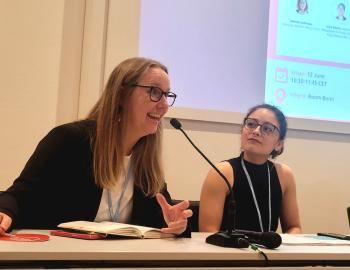
As part of SB64 in Bonn, CDKN supported a UNFCCC workshop for National Gender and Climate Change Focal Points to strengthen advocacy for gender equality and social inclusion (GESI). This blog, written by CDKN Programme Lead Lisa McNamara and CDKN GESI Lead Patricia Bamanyaki, reflects on this experience and the broader lessons for climate action to answer the question: How do we advocate for GESI when decision-makers are unconvinced?
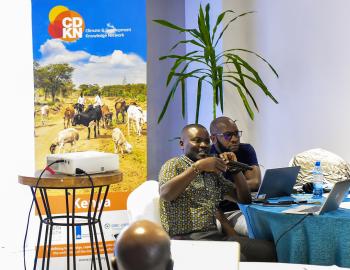
This project supports the Government of Kenya to develop a participatory Monitoring, Evaluation, Reporting and Learning (MERL) tool to improve the tracking of climate investments, outcomes, and impacts. It addresses gaps in existing monitoring systems that limit the measurement of climate action effectiveness, climate finance mobilisation, project sustainability, and reporting. Led by the Ministry of Environment, Climate Change and Forestry (MECCF) with support from CDKN Kenya and pilot counties, the tool is being co-created to strengthen evidence-based climate planning and accountability.
Feature
11th December 2011
Making climate compatible development happen
From COP17 in Durban, Sam Bickersteth, CDKN Chief Executive, reflects on how action by governments from the 'top down' and action by diverse stakeholders from the 'bottom up' are driving climate compatible development.
This project supports decision-makers in San Salvador prioritise actions to tackle the economic and social impacts of temperature increases in its most affected sectors.
Resource
16th October 2021
Finance for Resilience
CDKN's podcast series, Finance for resilience: Unlocking climate action, focuses on emerging themes within the climate finance field, and highlights innovative solutions from practitioners and experts.
4PCCD is a project examining the potential of partnerships between public, private and civil society actors to bridge the gap between rhetoric and action in climate change policy.
This project investigates the scope of Nationally Appropriate Mitigation Actions for identifying climate compatible agricultural options that also support other key policy goals.
The project is the second of a two phase effort that seeks to facilitate and develop a prioritised and costed policy research agenda and a Plan of Action approved by the Ministry of Health in Mozambique.
Resource
30th June 2025
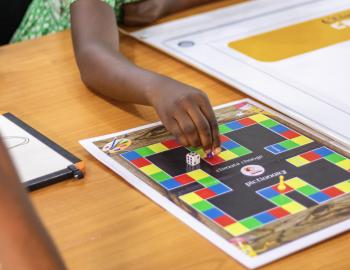
Participatory climate education: CDKN Ghana's inclusive climate games
These games utilise interactive, play-based learning to enhance climate literacy and inspire action, particularly among young people, women, and groups facing marginalisation. Designed to make learning more accessible, they provide an engaging and accessible way to share knowledge.