Outlook : Low Emission Development Strategies (LEDS) Special Edition
The January 2013 edition of the CDKN Newsletter focuses on Low Emissions Development Strategies (LEDS) and the work CDKN is undertaking with its partners in Central America, Togo, Cameroon, Southeast Asia and India.
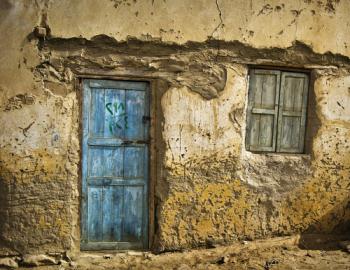
Overcoming hurdles to 'green' construction in India
Kriti Nagrath from Development Alternatives in India reflects on what it will take to get alternative technologies in the construction sector into the mainstream.
Provision of shelter following disasters is one of the largest recurrent cost for governments and relief organizations, and the failure of shelters to protect people from hazards is a significant risk. Improving shelter design is therefore central to reducing hydro-meteorological disaster risk and supports adaptation to climate change.
Feature
7th January 2013
Is India’s National Action Plan on Climate Change up to Scratch?
A recent study looking at the design of the eight missions under India’s National Action Plan on Climate Change aims to provide policy makers, academics and researchers, civil society groups and others an evaluation of the country’s climate missions as perceived by experts in the country.
Feature
2nd January 2013
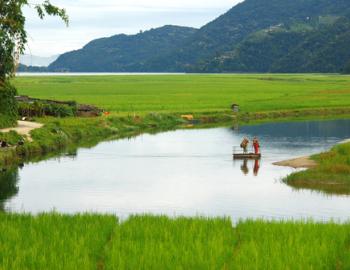
Nepal should highlight local efforts on climate change
In an article for the Kathmandu Post CDKN/Panos South Asia Journalist Fellow, Pragati Shahi writes that instead of only crying for help to deal with disasters, Nepal should highlight local efforts
Making food systems more resilient to climate change
A new project aims to make sure Central America’s food systems can withstand climate shifts. Marius Keller, from the International Institute for Sustainable Development (IISD), reports.
Feature
21st December 2012
Private sector engagement on disaster risk management and climate change adaptation
CDKN is seeking a supplier for a project in the Horn of Africa and Sahel regions which will investigate public-private sector partnerships and innovations around disaster resilience, improve understanding of the private sector’s role in building disaster resilience and results and experiences through digital media.