How Nepal's mountain dwellers are adapting to climate change
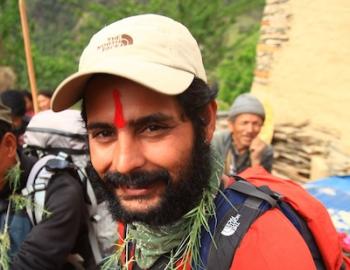
Nepali journalist Saroj Dhakal interviews British Council Climate Champion, Saurav Dhakal on his experience of completing the Great Himalayan Trail and what he thinks is needed to promote climate compatible development in the region.
Understanding food system climate resilience and developing practical indicators for communities, development practitioners and policy-makers.
Feature
10th September 2012
Amazonia’s security dilemma – Why climate security matters
CIAT’s Decision and Policy Analysis Research Area and the Global Canopy Programme (GCP), supported by the Climate and Development Knowledge Network (CDKN), are currently working on a project called “Amazonia – The Security Agenda (Responding to Imminent Threats)”
This research develops an innovative set of strategies, including an early heat-health warning system, to be implemented by local government officials in the city of Ahmedabad, in Gujarat state, India.
This project investigates the coping strategies developed by the families in rural areas in the Department of Atlántico, Colombia, which were affected by the hard winter, or rainy season, that hit Colombia in the last year.
The Global Islands’ Vulnerability Research, Adaptation, Policy and Development (GIVRAPD) project will integrate scientific and local knowledge from four comparative ‘learning study’ sites in the Caribbean and the Indian Ocean by using a common, community-based vulnerability assessment (CBVA) framework.
CDKN helps developing countries to design and deliver climate compatible development. When decision makers in government, business and civil society speak to us about their aims and needs, they often ask about ‘best practice’ in other countries or, indeed, mistakes to avoid.
This project aims to provide monetary support to the Coalition for Rainforest Nations (CfRN) in order to continue and scale up its advocacy role to support LDC countries to include the protection of rainforest and coastal marine ecosystems within the UNFCCC and other international forum.
CDKN’s support strengthened the ‘community of practice’ working on community based adaptation (CBA) by facilitating their engagement with policy-makers and practitioners working on traditional adaptation practices.
With support from CDKN, The Gambia revised its medium term plan - the Programme for Accelerated Growth and Employment (PAGE) - to integrate climate change into policies and actions. This was the first step towards developing a climate change strategy for the country.
CDKN will be providing in-depth support to low carbon development in Peru (Climate-Change Plan), specifically through the Mitigation Action Plans and Scenarios (MAPS) process, which constitutes Phase 1 of the CCPlan.