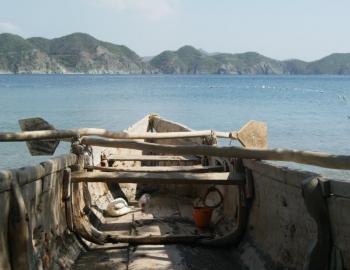
Belize’s economic growth is inherently linked to expansion of the tourism industry, yet the activities of this industry often result in habitat degradation, undermining the very ecosystems on which it depends. This project will assess the vulnerability of Belize’s tourism system to climate change, including the coastal ecosystems on which it depends, and examine how current policies serve to facilitate or hinder climate-compatible tourism development, based on healthy coastal ecosystems.
Very little is known about the potential impacts of climate change on Belize’s water resources, despite this being identified as a priority area of research for the country. This project will use modeling to assess the potential impacts of climate change on the supply and demand for water and water quality in Belize across different climate change and land use scenarios and in so doing, will determine the hydrographic areas most vulnerable to climate change.
In many Caribbean countries, national and sectoral level policies are lagging behind the already evident threats to development from climate change despite the strong efforts made at the international and community level to adapt. The Caribbean Natural Resources Institute (CANARI), in collaboration with the World Resource Institute (WRI) and the St. Lucia National Trust (SLNT) is implementing a project in St. Lucia and Trinidad and Tobago to increase civil society engagement in policy and institutional analysis for climate change adaptation.
Feature
10th April 2014
Building leadership on local level adaptation
Jenny Clover from ICLEI Africa reflects on efforts to establish a community of practice around Ecosystems-based Adaptation approaches within African cities
Feature
7th April 2014
Communicate both the IPCC findings and the process
Katharine Vincent, an author of the IPCC’s Fifth Assessment Report, reflects on our growing understanding of vulnerability, impacts and adaptation to climate change - and how the IPCC itself has evolved.
Working Paper : How to scale out community-based adaptation to climate change
This CDKN working paper explores the potential of ‘scaling out’ community-based adaptation pilots in order to bring more quality benefits to more people over a wider geographical area, more equitably, more quickly, and more lastingly.
How do you prepare for an uncertain future?
How could 'Flexible and Forward-looking Decision Making' help African communities to become more climate-resilient? Lindsey Jones introduces the latest findings from the African Climate Change Resilience Alliance (ACCRA).
Feature
25th March 2014
Taking action to cut emissions and boost development
CDKN and partners report from West Nusa Tenggara in Indonesia where the Government is designing a new type of support programme to promote renewable energy.