Strengthening rangeland management through community knowledge and science in Otjinene
Strengthening rangeland management through community knowledge and science in Otjinene
In Namibia’s Omaheke region, farmers are already seeing the impacts on rangeland management in a changing climate. However, communities are working with partners like CDKN to find practical and locally grounded solutions.
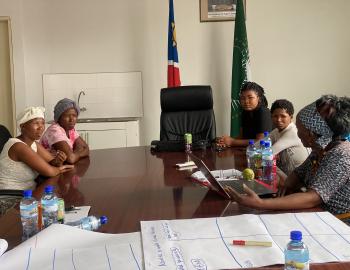
CDKN Namibia has been implementing capacity-strengthening activities in the Omaheke region, with a particular focus on the Otjinene constituency. Through Oxfam’s Vulnerability Risk Assessment process, held in Gobabis in 2024, communities identified rangeland management, poisonous plants, and water scarcity as the most pressing challenges.
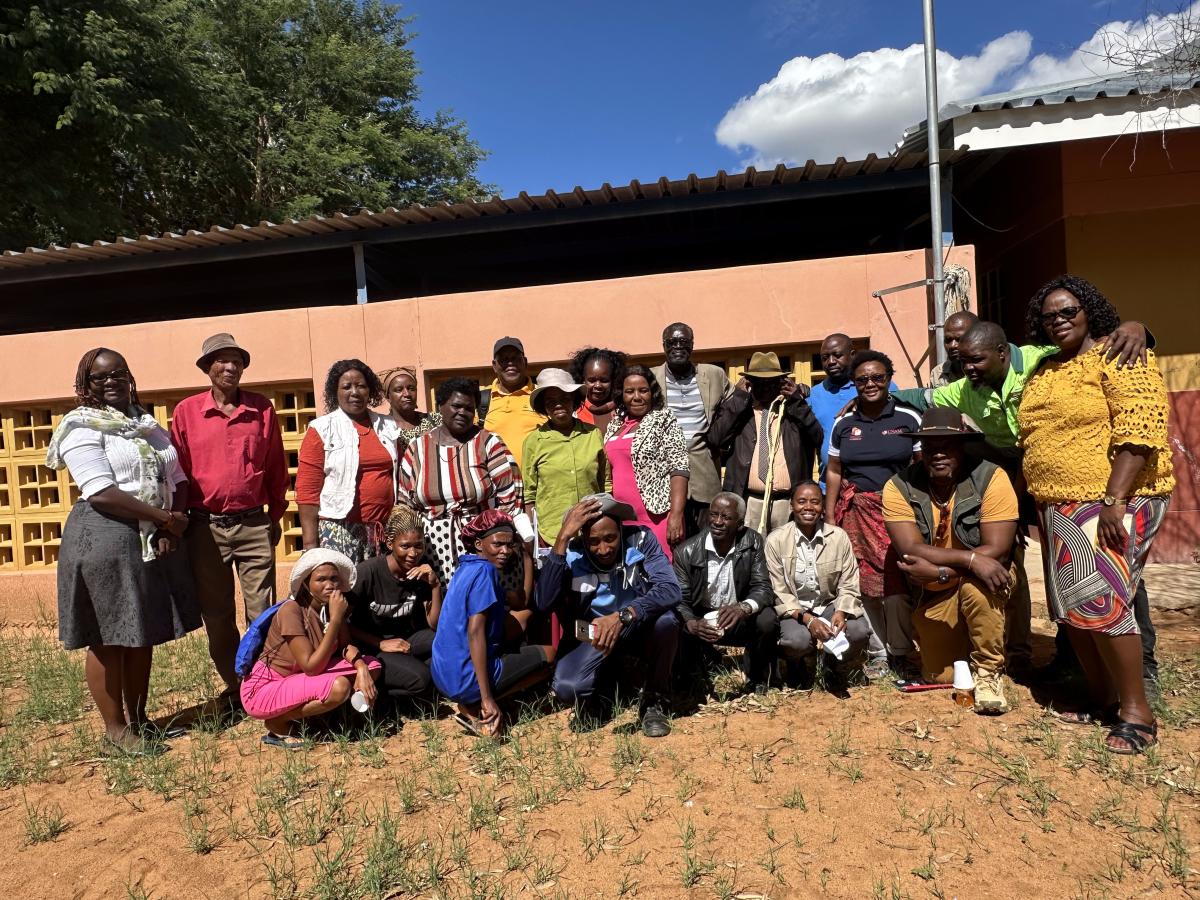
In February 2026, this process moved from identifying challenges to testing solutions. CDKN Namibia co-facilitated a three-day learning exchange with experts and community members to co-create solutions to these challenges. The event brought together rangeland experts from the University of Namibia and the Namibia University of Science and Technology, local San and Otjiherero farmers, traditional authorities, youth from the Otjinene Youth Forum, a representative from the Ministry of Environment Forestry and Tourism, and an extension officer from the Ministry of Agriculture, Water and Land Reform.
The aim was to explore practical ways to restore rangelands, manage the poisonous plant and improve fodder availability, while also strengthening relationships and fostering collaboration between government, academia, community-based organisations, and the constituency office for future engagements beyond CDKN.
A key strength of the exchange was the way it brought together different types of knowledge. Farmers shared lived experience of managing livestock in a changing climate, while researchers and extension officers contributed technical insights. This two-way learning helped ground scientific approaches in local realities, and ensured that proposed solutions were contextually sensitive and relevant.
Understanding grazing and rangeland health
One of the main sessions focused on helping farmers understand how grazing practices affect rangeland health and livestock productivity.
Through hands-on field exercises, participants were introduced to practical methods for determining grazing capacity using small field plots to measure grass availability. This exercise helped farmers realise that many grazing areas are already overstocked and that better management practices are needed to allow rangelands to recover.
Farmers also discussed communal grazing challenges, including illegal fencing and the need for stronger community agreements to regulate grazing and allow resting periods for grass regeneration. Several farmers committed to harvesting grass later in the season, storing seeds, and experimenting with reseeding to improve fodder availability.
Managing poisonous plants
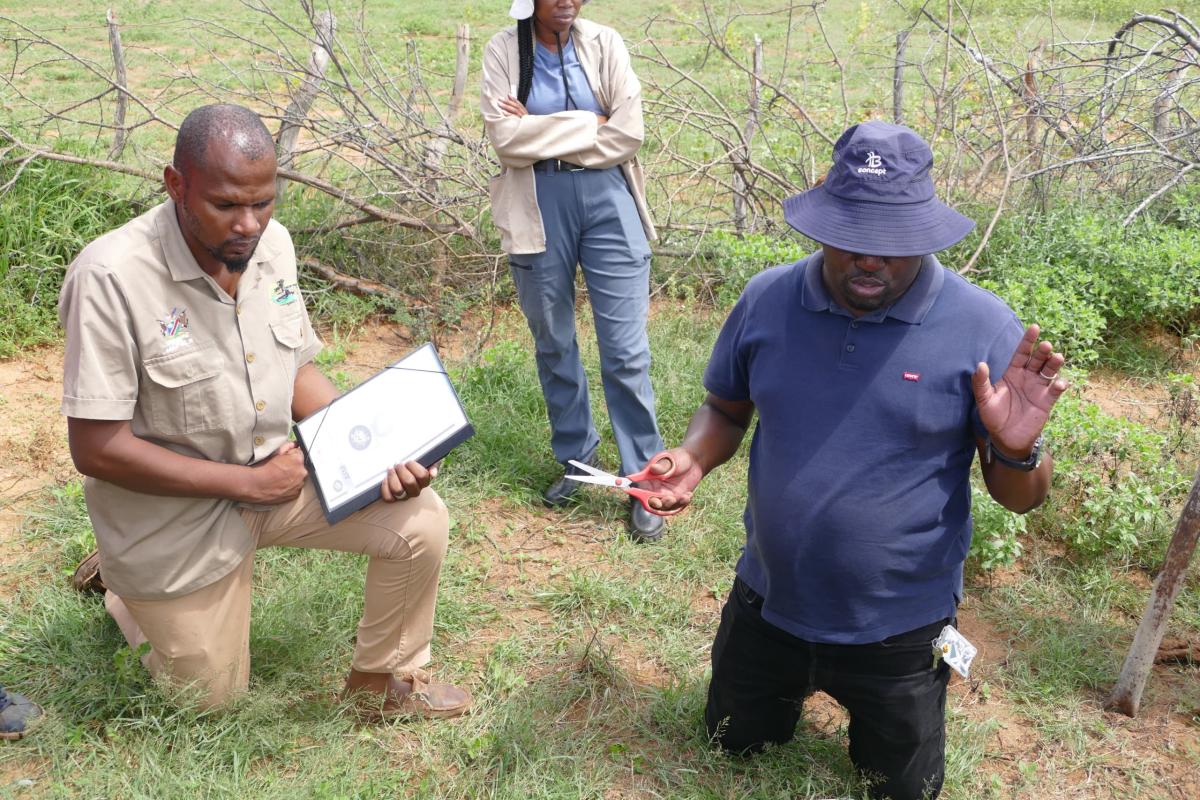
For many farmers, one of the most urgent risks is the poisonous plant Dichapetalum cymosum, locally known as Otjikurioma (Otjiherero) or Gifblaar (Afrikaans). The plant is known to be highly toxic to livestock and can cause sudden death within hours of consumption.
During the exchange, farmers shared experiences of livestock losses and discussed ways of managing the plant. Experts explained the plant’s characteristics and why it is difficult to remove due to its deep root system. At the same time, community members shared traditional knowledge on how to cope with its pervasiveness.
These discussions highlighted the importance of Indigenous knowledge in managing the challenges associated with climate change.
Fodder production and drought preparedness
Discussions also focused on fodder production as a strategy for improving livestock nutrition and coping with drought.
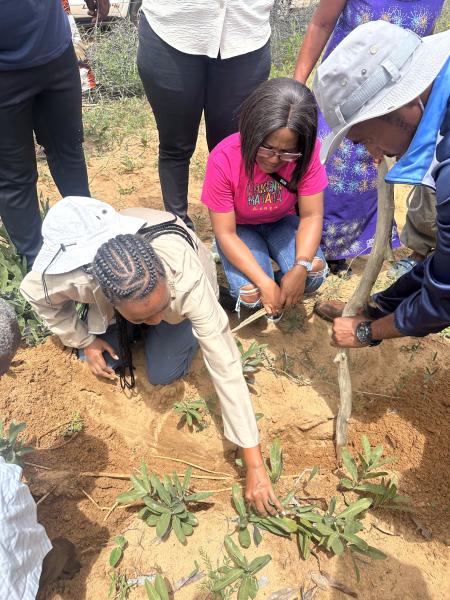
Farmers learned the difference between fodder and forage and explored ways of producing their own livestock feed through grass and legume cultivation. Natural pest control methods using locally available materials such as neem leaves and chili were also introduced as environmentally friendly alternatives to chemical pesticides.
Bush thinning was discussed as another strategy to improve rangeland productivity while creating opportunities to produce livestock feed or biochar for soil improvement.
Otjinene action plan and the way forward
On the final day, participants reflected on key lessons and developed an updated community action plan for Otjinene. Priority actions include expanding farmer training, promoting rotational grazing, increasing fodder production, and improving awareness about poisonous plants.
The engagement also highlighted the need to involve young people more actively in farming and environmental management. Community members stressed the importance of mentorship and passing on Indigenous knowledge to future generations.
Overall, the engagement demonstrated the value of collaboration between farmers, researchers, and government institutions. By combining scientific knowledge with local experience, communities are better positioned to strengthen sustainable rangeland management and protect their livelihoods in the face of climate challenges.