
In conversation: Building climate resilience through art with Baana Enono Arnaud
In conversation: Building climate resilience through art with Baana Enono Arnaud
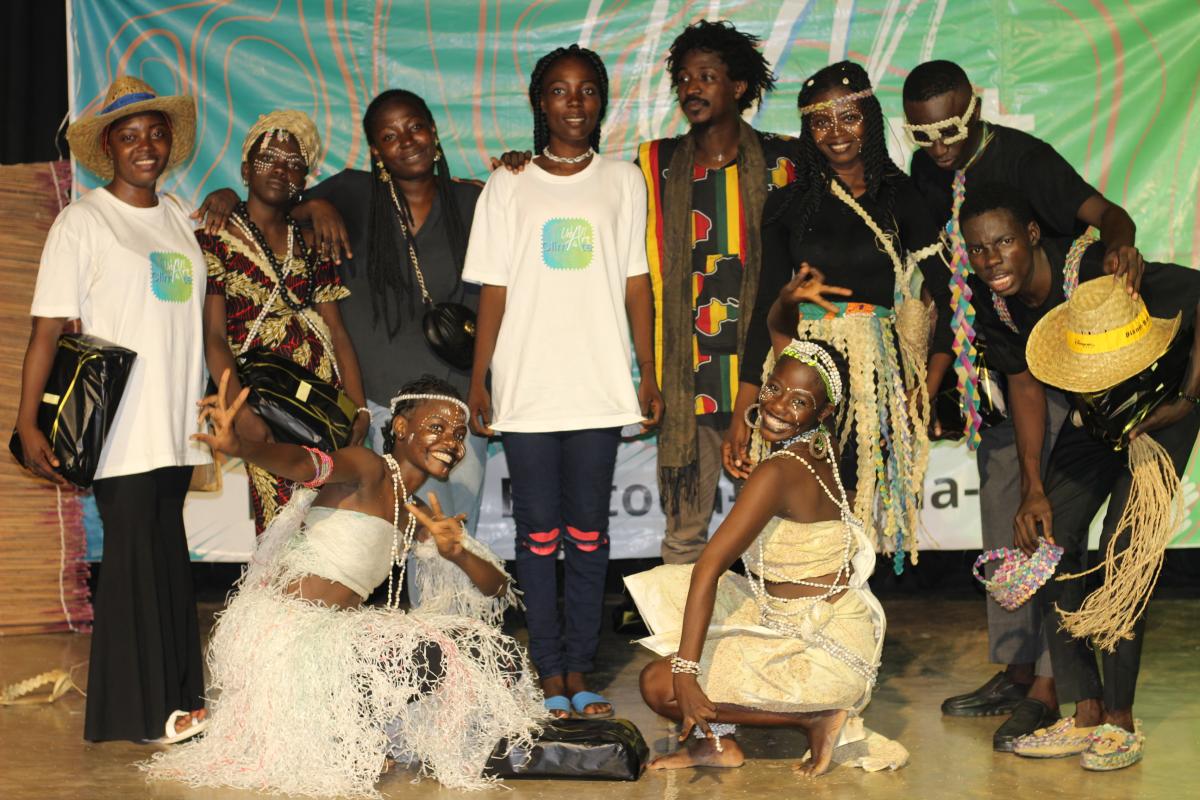
Across Cameroon, young people are using artistic expression to engage with environmental challenges affecting their communities. Through slam poetry, storytelling, stand-up performance, and traditional crafts, the Urban Art 4 Climate project has created opportunities for young people to explore the realities of climate change while connecting with Indigenous knowledge and livelihood practices rooted in their local contexts.
Implemented by Grand Slam National through CDKN's Knowledge-to-Action (K2A) programme, the initiative works with young people in Maroua, Bertoua, Douala, and Kribi to transform climate awareness into creative action. Alongside artistic training, participants engage with environmental issues affecting their communities, from desertification and deforestation to overfishing and biodiversity loss, while developing practical skills linked to environmental stewardship and local livelihoods. For some participants, these activities also generated modest income opportunities through crafts, exhibitions, and artistic performances, demonstrating that climate action can be linked to both environmental awareness and economic opportunity.
In the following conversation, Essia Guezzi, CDKN Grant Manager for Locally Led Adaptation, speaks with Baana Enono Arnaud, General Coordinator of Urban Art 4 Climate, about how the initiative brought together climate knowledge, artistic expression, Indigenous practices, and livelihood opportunities, and what it revealed about engaging young people in locally led climate action.
EG: Urban Art 4 Climate combines creative expression, environmental awareness, and livelihood development. Can you tell us a little about the initiative and how it fits within Grand Slam National's wider work on locally led adaptation?
BEA: The project provides a platform for young people to artistically express themselves and advocate for improved livelihoods resilient to climate change. Grand Slam National recognises that young people are willing and excited to express themselves artistically. The project gives them an opportunity to use this artistic expression to raise awareness about the impacts of climate change and other environmental issues in their communities. The goal is for these young people to become champions of these sustainable practices and climate knowledge and engage with their parents and older generations on their traditional practices. In turn, parents also learn from their children.
EG: There was strong interest in the initiative from the outset. How did participation evolve from the initial open calls through to the more intensive training and residency stages?
BEA: Young people need to speak about their own environments for climate action to resonate. The open calls reflected this philosophy. Across four cities, Maroua, Bertoua, Douala, and Kribi, approximately 800 young people aged 15 to 22, both in and out of school, responded to invitations to create slam poetry, storytelling, and stand-up performances rooted in local climate realities.
Yet, I found that participation narrowed quickly. Only 30 young people per city were selected (out of 120 in total), with deliberate gender balancing (18 girls and 12 boys per city).
From these groups, just six young people per city (four girls and two boys) entered applied training residencies combining artistic creation with Indigenous environmental crafts.
The filtering process confirmed the structural limits of small, intensive arts-led programmes: while demand was large, deep engagement was necessarily selective. Creating meaningful spaces for action requires focus and intensity, but this inevitably limits scale.
These results both validate and challenge the initiative’s founding assumptions. Art did create spaces where climate action felt concrete rather than abstract. Co-creation did work, but at a cost. Livelihood links were possible, but fragile. Inclusion extended beyond individuals to families but required negotiation rather than transformation.
EG: A key aspect of the initiative was bringing together artistic, environmental, and Indigenous knowledge. How did that process work in practice?
BEA: I have always resisted the idea that young people are passive recipients of climate education. From the beginning, I saw this as a process of co-creation, where young people actively shape climate knowledge rather than simply receive it. Training sessions brought together professional artists, environmental practitioners, and holders of Indigenous knowledge. While climate information and technical skills were introduced by trainers, young participants actively reshaped them
In straw weaving sessions, for example, experimentation by participants led to new forms and uses, forcing trainers themselves to adapt. Learning did not flow in one direction. However, the results also introduced nuance: co-creation was strongest within the small residency groups, while broader training cohorts engaged more unevenly. Co-creation proved possible, but resource intensive.
EG: Why is it important to link artistic expression to practical skills and livelihoods?
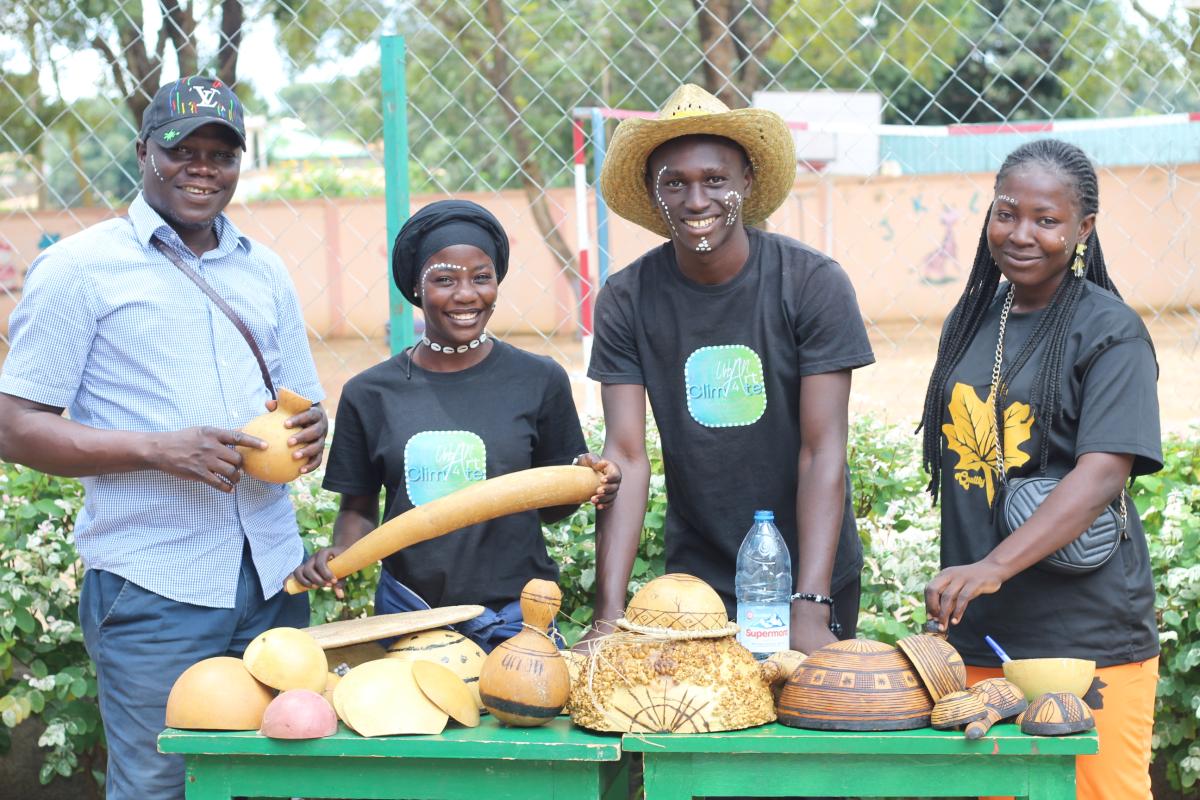
BEA: I believe that art has to connect to practice, skills, and livelihoods to matter. The initiative tested this claim directly. During residencies, participants were trained in straw and bamboo weaving, calabash and pottery production, improved cookstove construction, recycling practices, and eco-construction techniques.
Concrete economic outcomes did emerge. In Maroua, 26 young people (of which 15 girls) gained part-time employment or modest income through calabash, pottery, and straw-based crafts. In Bertoua, 15 young people (of which 9 girls), many not in formal education, were employed part-time in raphia and bamboo workshops, responding to labour gaps left by youth migration. Similar arrangements appeared in Douala and Kribi, where youth combined crafts with performances and exhibitions.
But income was small, irregular, and insufficient as a standalone livelihood. It eased immediate pressures and helped reframe Indigenous crafts as economically valuable, but it did not fundamentally alter participants’ economic precarity. The initiative confirmed that linking art and skills can open pathways but also revealed how fragile those pathways remain without sustained investment, market access, and scale.
EG: What role did public performances and exhibitions play in the initiative?
BEA: Climate-engaged art requires physical spaces – not to talk, but to act. Public performances and exhibitions became a core strategy to test this belief. Through touring events, the initiative reached more than 700 community members: around 60 people per event in Maroua, Garoua, and Ngaoundéré; 200 in Bertoua and Yaoundé; 210 linked to Douala, Yaoundé, and Kribi; and approximately 250 in Kribi and Yaoundé.
I noticed that these events disrupted everyday public spaces, combining performances with dialogue, demonstrations, and product exhibitions. Community members did not simply watch; they discussed, questioned, and in some cases bought products. However, while visibility and engagement were high, follow-up varied. Demonstration effectively sparked conversation and interest, but deeper behavioural change emerged more clearly within families and peer networks than at scale across entire communities.
EG: Gender equality and social inclusion were important objectives of the initiative. What lessons did you learn about creating meaningful opportunities for young women and other often excluded groups?
BAE: Social negotiations were required to include young women. The results confirm that gender inclusion was not achieved through quotas alone. Although women were the majority in many cohorts, participation sometimes depended on negotiation with parents or husbands, highlighting how agency is shaped by household dynamics.
The deliberate inclusion of young people not in formal education, particularly in Bertoua and Maroua, further tested the initiative’s inclusivity. For these participants, even modest income and public recognition had outsized significance. Yet it was clear to me that inclusion required time, trust, and contextual sensitivity, resources that arts-led projects often underestimate.
EG: If you could share one takeaway, what would it be?
BEA: I would say that the most grounded lesson is not that art alone can deliver climate resilience, but that arts-led approaches can open doors: to dialogue, skills, modest income, and shifts in perception. Whether those doors lead to lasting pathways depends less on creativity than on what follows — support, investment, and long-term commitment to the young people who step through them. This addresses the main challenge that climate change feels distant, abstract, and disconnected from the immediate pressures shaping young people’s lives.
Baana's reflections show that engaging young people in climate action is not simply about raising awareness. The Urban Art 4 Climate initiative demonstrated how creative expression can become a vehicle for knowledge exchange, livelihood development, community dialogue, and environmental stewardship.
While the initiative also revealed important limitations, including the challenges of scaling intensive arts-based approaches and sustaining livelihood opportunities beyond the life of a project, it highlighted the unique role that creativity can play in helping young people connect climate change to the realities of their everyday lives.
By bringing together artistic practice, Indigenous knowledge, and locally relevant climate action, the initiative shows how youth-led approaches can contribute to locally led adaptation in ways that are participatory, culturally grounded, and economically meaningful. As climate impacts continue to affect communities across Cameroon, these kinds of approaches offer valuable lessons for how adaptation can be made more accessible, engaging, and relevant for the next generation
See here for the French translation of this interview
To learn more about Grand Slam, visit their K2A project page.