Strengthening urban climate resilience across Asia
Strengthening urban climate resilience across Asia
Overview of partnership with ICLEI
ICLEI – Local Governments for Sustainability, South Asia is the Asia Coordinator for the CDKN programme since 2019. Through the CDKN programme, ICLEI South Asia is strengthening urban climate resilience across Asia, with focus on gender and social inclusion, ecosystem-based adaptation and access to finance for locally led adaptation actions. The collaboration supports municipal governments in India, Bangladesh, Nepal, and Sri Lanka to develop climate resilient development plans and strengthens the capacity of local government officials to undertake climate resilient actions on multiple sectors of municipal development, such as waste management, water management, disaster risk reduction among others.
Regional context
In Asia, CDKN is working in India, Bangladesh, Nepal, and Sri Lanka countries. It is one of the world's most climate-vulnerable regions. Its diverse geography, from the Himalayas to low-lying coastal deltas, creates multiple risk zones. Across the region, populations face escalating threats including floods, cyclones, droughts, heatwaves, landslides, and sea-level rise. In India and Bangladesh, high population density and rapid, unplanned urbanisation intensify these hazards in urban areas with weak municipal services, urban heat island effects, and coastal exposure placing cities at acute risk. Nepal faces glacial lake outburst floods, and erratic monsoon patterns that undermine water and food security and damage infrastructure. Sri Lanka confronts increasing frequency of extreme weather events compounded by ecosystem degradation and inadequate waste management. Throughout the region, the most marginalised communities including women, low-income households, lower caste populations, bear a disproportionate burden of these impacts.
Climate governance across the region involves complex, multi-level actor ecosystems. National governments, environment and disaster management ministries provide policy frameworks and lead international climate commitments, while urban local bodies, municipal councils, and provincial governments are central to on-the-ground implementation. While many local governments are taking action on climate and disaster risks, they need technical assistance to integrate such actions with their local and national development priorities. Across all four countries, civil society, academic institutions, and community-based organisations remain critical for grassroots resilience. Across the region, ecosystem-based adaptation, climate hazard vulnerability assessments, gender-inclusive planning frameworks, and smart infrastructure investments are gaining traction. The private sector is also contributing through renewable energy and climate-resilient infrastructure development, offering further momentum for comprehensive, community-inclusive resilience strategies at scale.
In Asia, CDKN has supported 8 local governments directly by developing inclusive local action plans for adaptation or disaster risk reduction and facilitated community-led and managed actions on ground, besides developing and strengthening capacity of local government officials to undertake climate actions.
Programme objectives
To advance equitable, financed and ecosystem-based action on climate change, the programme:
-
Strengthens local government knowledge and technical capacity to understand, plan for, and respond to climate impacts and disasters in socially inclusive ways.
-
Develops local climate action plans—including adaptation, resilience, and DRR plans—aligned with national and municipal priorities.
-
Promotes LLA by positioning municipalities and communities as central actors in climate decision‑making and implementation, by integrating GESI and EbA into local planning processes.
-
Produces and shares knowledge products that promote wider uptake of inclusive, nature‑based adaptation solutions.
-
Support on‑the‑ground implementation of locally led adaptation projects that enhance resilience, food and water security, and livelihoods.
Target beneficiaries
- Municipal officials and technical staff of the city administration
- Vulnerable community representatives, including women and urban poor
Programme activities
Regional level
Capacity building and peer exchange programme
A training and peer exchange programme is being conducted from October 2025 to November 2026, to strengthen capacities of selected municipal officials from 17 cities from India, Nepal, Bangladesh, and Sri Lanka. The cities were selected through an expression of interest (EoI) where most of them indicated their interest in the topics of climate resilience, disaster risk reduction, and sustainable solid waste management. The EoI was supported with a letter of intent (LoI) where participants provided information on how they intend to utilise the learnings of the training in their respective cities. All the training sessions are aligned with a focus on gender and social inclusion.
To date, two in-person training workshops have been conducted, an introductory workshop for gender and socially inclusive climate resilience in Delhi in October 2025 and a workshop on sustainable solid waste management in Sri Lanka in May 2026. In addition, six webinars have been organised, including one on solid waste management and circularity, one on the disaster resilience scorecard for cities, and four focused on detailed climate resilience in cities. Each training session and webinar also includes presentations from the sector experts and practitioners of reputed institutions, government, and non-government agencies. For measuring the changes in level of understanding of the participants through the trainings, each session includes pre and post assessments through google forms. Participants are expected to apply the knowledge and skills gained from the training in their respective areas of work by developing project proposals, securing project funding, improving ongoing projects, designing new interventions, and exploring other ways to advance climate resilience and sustainable urban development.
An ‘outcome monitoring sheet’ was prepared and shared with the participants to measure changes in their city’s capacities. This sheet indicated that more than half of the participants have applied learnings of the training for improved climate action and disaster management in their respective cities. Some of the practice of changes are shared here - In Sri Lanka, the Climate Change and Disaster Management Committees of Ayagama, Deraniyagala, and Aranayaka Pradeshiya Sabhas convened meetings in December 2025, where it was formally agreed to prepare Gender-Responsive Climate Action Plans in 2026. In Nuwara Eliya, Municipal Corporation has planned and commenced improvements to the Gregory Lake drainage system to enhance flood regulation capacity and reduce urban flood risks. In the hill city of Namchi, India, detailed discussions are underway with local councillors, where they are planning a pilot climate risk assessment for the Namchi Municipal Council (NMC) that encompasses various thematic layers of climate vulnerability including slums, women, elderly, marginalised communities and migrant population. In Bangladesh, Sreepur municipality is creating a high-resolution geospatial database to support Sustainable Urban Development, Conservation, and Hydrological management of the Historic Waterbody, the Digital Topographical and Physical Feature Survey of Wadda Dighi, situated in Ward No. 01 under Sreepur Paurashava (Municipality), Gazipur, was conducted on May 02, 2026.
Session on integrating VLRs and VNRs for SDG reporting
CDKN Asia conducted a session at the 13th Asia-Pacific Forum on Sustainable Development (APFSD) in February 2026 in Bangkok, Thailand. The session was on ‘Connecting the Dots: Integrating VLRs and VNRs for SDG Reporting’, which was convened virtually. The objective was to strengthen understanding and collaboration between local and national governments for integrating VLRs into national SDG reporting processes. The panel discussion brought together representatives from the Maldives, Nepal, and Fiji, alongside participants from the CDKN Global Network, ESCAP, and ICLEI South Asia, who called for greater national government support to institutionalise VLR processes, invest in local data systems, and ensure that local priorities meaningfully inform national SDG roadmaps.
Session on operationalising locally-led adaptation in Indian context
The session was organised in the ‘Resilience and Sustainability Summit - Vision 2047’ in Delhi by ICARS (A Centre of Excellence, of Department of Science and Technology-Government of India) - IIT (Indian Institute of Technology) Roorkee jointly with National Disaster Management Authority (NDMA) and other partners. It aimed at generating valuable insights on how Indian cities can operationalise locally-led approaches within the existing urban governance frameworks. It increased the awareness about principles and benefits of LLA for strengthening climate resilience and disaster risk reduction. It also enhanced the skills to identify opportunities and challenges for implementing LLA in Indian cities, in terms of governance and financial aspects relevant to climate resilience.
Regional training workshop under MCR 2030
CDKN Asia conducted a three-day Regional Training Workshop in February 2025 on Enhancing Climate and Disaster Risk Resilient Cities in Asia and the Pacific under the Making Cities Resilient (MCR) 2030 initiative in Bangkok, Thailand. The workshop brought together participants from 13 local governments and local government associations across seven countries in South and Southeast Asia. It aimed to enhance climate and disaster risk resilience in cities by mainstreaming climate resilience actions while promoting gender equality, social equity, and inclusivity, ensuring that no one is left behind. It also introduced tools like Climate Resilience Cities (CRC) methodology, which emphasises an evidence-based, scientific, and flexible approach to help cities develop localised, participatory, and inclusive climate action plans. Additionally, it facilitated peer learning by sharing best practices, such as the Vijayawada Municipal Corporation’s commitment to climate-responsive budgeting and alignment with the Net Zero Vision-2047 under the MCR 2030 framework.
MCR 2030 webinar
CDKN Asia participated as a speaker in the MCR2030 Webinar Series hosted by AIT RRC.AP, and MCR2030 Asia-Pacific in January 2026 on Advancing Urban Resilience in Asia and the Pacific through Integrated Planning, Digital Innovation, and Finance. We presented on the topic - ‘MCR 2030 partner contributions for 2026-2027 and opportunities for coaching, peer exchanges, and technical pathways’ in the session of digital innovation for risk governance. We took opportunity to discuss about our training modules, tools and methodologies needed for the capacity building, and highlighted about knowledge management and peer learning, and technical assistance process.
Cross regional peer-to-peer learning event
CDKN Asia and CDKN Africa organised a cross-regional peer-to-peer exchange event in September 2024 that enhanced collaboration between Nepal and Kenya in addressing climate change and fostering Global South-South partnerships. The exchange aimed to help Nepal's delegation learn from Kenya’s Devolved Climate Finance Mechanism to support adaptation actions under Nepal’s LAPA framework. The objective was to explore Kenya's frameworks and policies that support devolved climate finance, gaining insights into how national structures facilitate local-level climate action. Officials from Nepal’s Ministry of Forest and Environment, Karjanha, and Dhulikhel municipalities engaged with Kenya’s National Treasury, Council of Governors, and Makueni County. The discussions highlighted Kenya’s locally led climate solutions and facilitated knowledge sharing on mobilising and managing local climate finance.
Parallel session at Asia-Pacific Urban Forum
CDKN Asia organised a parallel session in Suwon, South Korea in October 2023 on the topic - Investing in Locally-Led Adaptation (LLA) for bottom-up approach to urban resilience at the Eighth Asia-Pacific Urban Forum (APUF-8). The session aimed to build a deeper and wider understanding of the critical role played by locally led adaptation interventions in enhancing inclusive urban resilience. provided a platform for experts and practitioners from the region to discuss the critical role played by local actors in initiating and scaling up locally-led adaptation interventions, bringing good practices and examples highlighting how local experiences and priorities can be informed and practiced.
Training workshop on building cities' resilience to climate and disaster risks
The workshop was organised in Thailand in February 2024 for municipal officials and other key decision-makers from seven different countries such as Nepal, Bangladesh, Philippines, Thailand, Malaysia, Indonesia, and Cambodia. The objective of the workshop was to build the capacities of the participating cities on mainstreaming disaster risk reduction and climate change adaptation into local planning and policy development processes, using the Making Cities Resilient (MCR) methodology, tools, and templates based on UNDRR’s 10 Essentials, which is an ‘operational framework of the Sendai Framework at the local level’.
Parallel session in Asia Pacific Climate Week
CDKN Asia with support from UNEP and IUCN, organised a parallel session in Johor Bahru, Malaysia, in November 2023 on the topic - ‘Investing in Locally-led Adaptation for Enhancing Resilience: Possibilities and Barriers’ at the Asia Pacific Climate Week (APCW). The session brought together experts, practitioners, and LLA implementers as well as local governments to elaborate on the scale of the needs, opportunities, as well as barriers faced while accessing finance for locally led adaptation (LLA) interventions at the ground level. It provided a platform for subject experts, practitioners, funders, academics, and civil society representatives from across the region to discuss the critical role of local actors in advancing climate resilience, and examples that highlighted how community-based approaches, from tidal river management in Bangladesh to ecosystem-based adaptation across the Asia Pacific can be better supported and scaled through improved financing mechanisms and multi-level collaboration.
Sessions at Asia-Pacific Climate Change Adaptation Forum
CDKN Asia was invited to speak in two sessions in Incheon, Korea in the 8th Asia-Pacific Climate Change Adaptation (APAN) Forum in August and September 2023. First was the plenary session on Maximising the Benefits of Climate and Biodiversity Nexus, and the second was the parallel session on Innovative models for financing and investing in climate resilience building of cities, infrastructure and settlements. The plenary session discussed about the governance structures and institutional arrangements present in the countries and how countries are incorporating the interlinkages between climate change and biodiversity into their national policies, strategies, and plans. We highlighted about our nature-based solutions compendium in the session. In the parallel session, we discussed about the existing financing models and investments made to support climate adaptation for cities, settlement and infrastructure whilst identifying novel pathways and mechanisms to spur greater investments in this space.
Session at World Urban Forum
CDKN Asia in partnership with NIUA, GCoM South Asia, SDC, organised a combined session at the 12th World Urban Forum (WUF 12) in Cairo in November 2024, on the topic ‘Fostering Sustainable Lifestyles through Climate-Smart Development and Urban Partnerships – Lessons from India / Accelerating Locally-Led Adaptation for Resilience Building in Cities’. The session aimed to build an understanding of how Indian cities are advancing climate action planning and implementation, and how these experiences can inspire subnational governments across the Global South. It provided a platform for experts and practitioners to discuss the significance of locally led adaptation measures in strengthening urban resilience, sharing good practices and examples that highlight how local priorities, from decentralised waste management in Kochi to electric mobility in Panaji, can be integrated into broader climate strategies and replicated by cities facing similar challenges.
India Programme
In India, the CDKN programme is strengthening the capacity of Kakinada and Vijayawada municipal governments to embed inclusive disaster resilience and gender‑responsive climate action into urban planning. In Kakinada, workshops and consultations have helped city officials adopt participatory, prevention‑focused disaster planning informed by the experiences of women, informal workers, and construction workers. In Vijayawada, CDKN has strengthened institutional readiness to mainstream gender equity and social inclusion, resulting in the municipality requesting a technical session on integrating GESI into climate action.
With technical support from CDKN, the two cities have developed a plan to integrate gender and social inclusion and ecosystem-based adaptation actions into their local climate resilience action plans. ICLEI South Asia is engaging with the Andhra Pradesh State Disaster Management Authority to facilitate uptake of these plans at a wider scale.
A policy brief is being developed for Integrating Gender and Climate Adaptation into Disaster Policies in India. The policy brief outlines the issues with localising disaster risk reduction in local governments and integrating GESI consideration in local disaster risk management and identifies solutions that can facilitate this integration.
Knowledge to Action: Community-Led action plan for climate resilient water security in Darjeeling Himalayas
The tea garden settlements in Darjeeling Himalayas represent a climate-sensitive mountain ecosystem where communities face increasing water stress due to erratic rainfall patterns, high runoff, limited groundwater retention, and degradation of natural water sources. Through the Knowledge to Action (K2A) project under CDKN, ICLEI South Asia is working with communities from 4 hamlets in 4 tea gardens, building their capacity to manage and monitor water resources in their villages as part of a larger initiative called the ‘Community-Led Action Plan (CLAP) for Climate Resilient Water Security in Darjeeling Himalayas’. While the larger project is supported by Swiss Philanthropy Foundation (SPF), CDKN is supporting the training, capacity strengthening and knowledge management of this initiative.
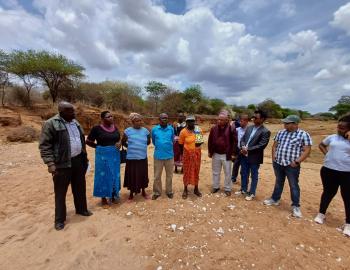
The primary beneficiaries are households across four hamlets, namely Daragaon, Bahidardhura, Godamdhura, and Kothidara. In these villages, under the larger project, communities are involved to co-create water security plans and identify solutions that can strengthen water security in these villages. Out of these solutions, one intervention is being piloted in each village – such as staggered contour trenches, repair and reconstruction of water tanks, solar pumping of water from inaccessible points to the villages, etc, that look at both restoration of water sources, conservation of these sources, and increasing accessibility to the villagers. CDKN is supporting the villagers to develop a water committee that will not only look after the pilot project, manage and monitor the construction of tanks and pumps, but also ensure that the water security plan developed in the project is taken up by the rural local government (Panchayat) through their Gram Panchayat Development Plan in a phased manner. Community-level water committees have been formed in the hamlets to support at the local institutional level. These committees are intended to support dialogue, planning, and engagement with the Gram Panchayat, and are designed to remain aligned with, and transition into, formal Panchayati Raj structures such as the Village Water and Sanitation Committee (VWSC). The committee members will be responsible for monitoring and managing the on-ground pilot implementation work and coordinating with the residents to sustainably and efficiently manage the water sources in their hamlets.
For this purpose, community training and capacity building is being undertaken. Until this date, 3 trainings have been conducted that have introduced the local communities to climate change, water systems, and community-based water management. Community consultations, site assessments, and technical planning have been completed across all four pilot locations, and pilot project implementation has been initiated with strong community participation through shramdaan (voluntary labour) for excavation works, site preparation, and initial infrastructure setup.
Bangladesh Programme
In Bangladesh, CKDN Asia is supporting the municipalities of Nilphamari and Lalmonirhat to develop Climate‑Induced Disaster Risk Reduction (DRR) Action Plans that prioritise community‑driven, equitable ecosystem‑based adaptation (EbA) to reduce disaster risks with the aim of strengthening locally-led and inclusive disaster resilience planning. Through multi‑stakeholder workshops and focused group discussions, the project has identified context‑specific resilience strategies, shifting planning away from infrastructure‑heavy approaches toward ecosystem‑based solutions such as urban forests, water‑body protection, rain gardens, and permeable pavements, that benefit the most vulnerable populations including women and urban poor. CDKN Asia facilitated a participatory validation process in Lalmonirhat and Nilphamari to validate locally appropriate disaster risk reduction strategies covering the pre-, during-, and post-disaster phases.
Stakeholder consultations, focus group discussions (FGDs), and ward-level field visits ensured that the proposed interventions were grounded in local realities. In Nilphamari 72 community members were consulted (63 men and 9 women) while in Lalmonirhat, 45 community members were consulted (35 men and 10 women). Key validated interventions varied from infrastructural interventions such as multi-hazard early warning and communication systems to non-infrastructural capacity enhancement of communities through volunteer response networks, evacuation planning, public awareness programmes, targeted support for women, children, farmers, transport workers, and other vulnerable groups, as well as local planning interventions such as rapid damage assessments, livelihood recovery support, etc. Importantly, the action plan integrates EbA, GESI principles. The validation process also ensured that diverse community perspectives, particularly those of vulnerable groups, were reflected in the proposed interventions. By combining technical inputs with participatory processes that brought in community knowledge and lived experiences, the process helped identify context-specific and socially inclusive disaster risk reduction priorities.
A policy brief has been developed on Harnessing nature for urban resilience: Integrating NbS into development planning in Bangladesh. The brief investigates the benefits of nature-based solutions for improving local resilience levels in urban areas of Bangladesh and offers recommendations to facilitate this process.
Knowledge to Action: Supporting resilient livelihoods in Sapatana Ashrayan-2, Lalmonirhat
Sapatana Ashrayan 2 is a government-supported housing settlement located in Ward 9 of Lalmonirhat Municipality, in northern Bangladesh. The settlement lies within the floodplain of the Teesta River and is highly exposed to seasonal flooding and climate variability. While access to housing has improved living conditions for previously homeless families, residents continue to face multiple challenges, including limited access to stable livelihood opportunities. This, combined with recurring climate shocks, increase vulnerability and reduce the capacity of households to cope and recover.
The project aims to strengthen the economic resilience of selected climate-affected households in Sapatana Ashrayan 2 by supporting sustainable and locally appropriate livelihood options. It seeks to identify the most vulnerable households, enhance their skills and capacities, provide necessary resources for income generation, improve access to markets and institutional support, and generate learning that can inform replication and scaling in similar contexts.
The project is being executed with support of Eco-Social Development Organization (ESDO) - the local implementing partner. This intervention will support vulnerable households through a structured livelihood-strengthening approach. It begins with a participatory assessment (FGDs, household surveys, and consultation with the municipality and partners) to identify 10 highly vulnerable households, including women and youth. Each selected household receives necessary start-up inputs such as tools or starter kits to initiate income-generating activities and customised training (e.g. tailoring, food processing, or mobile servicing) to build or enhance relevant skills. The programme further strengthens sustainability by linking beneficiaries with local markets and municipal support systems in Lalmonirhat, alongside continuous mentoring and follow-up support. The outcomes, challenges, and lessons learned will be documented to share with relevant stakeholders to inform future scaling and replication of effective livelihood models.
Nepal Programme
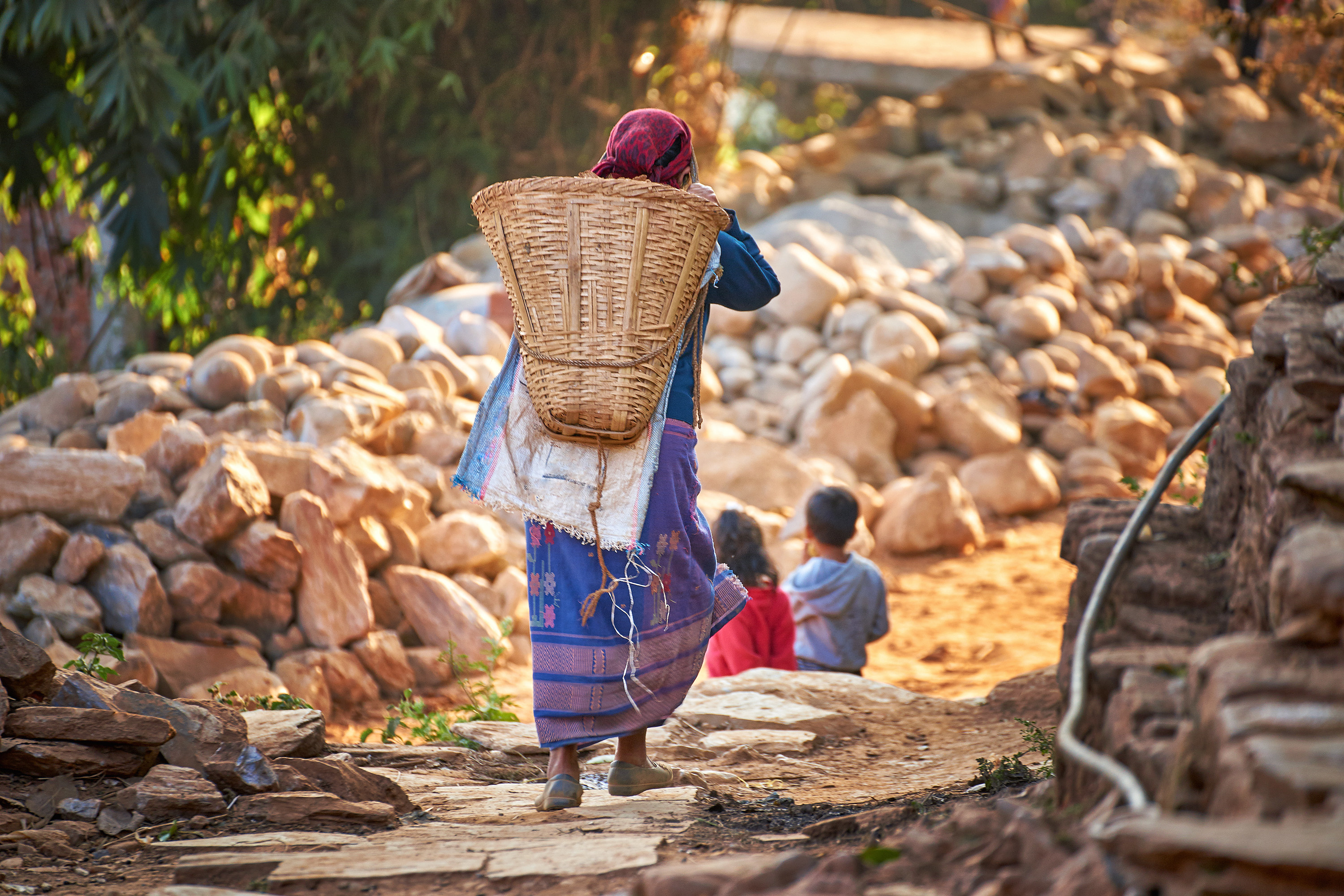
In Nepal, CDKN Asia is supporting the municipalities of Dhulikhel and Karjanha to develop inclusive Local Adaptation Plans for Action by strengthening the ability of municipal officials and communities (especially women, Dalit groups, and other marginalised residents) to assess climate vulnerabilities and design targeted adaptation actions. CDKN conducted ward‑level Vulnerability and Risk Assessments, facilitated separate discussions with vulnerable groups, and helped municipalities identify ecosystem‑based adaptation (EbA) measures such as water‑recharge ponds, slope stabilisation, and forested catchment protection that benefit the most vulnerable populations.
During the preparation of the Local Adaptation Plans for Action (LAPAs) for the Nepalese cities of Dhulikhel and Karjanha, the CDKN Asia team facilitated a series of shared learning dialogues and focus group discussions to assess the impacts of climate change on local socio-ecological systems. Particular attention was given to understanding the vulnerabilities and adaptive capacities of women and dalit (low caste) marginalised groups. Separate discussions were also conducted specifically with women to ensure their perspectives and experiences were adequately captured. In Karjanha, a total of 215 community members participated in the assessment process, including 115 women and 100 men. Similarly, in Dhulikhel, 225 community members took part in the vulnerability assessment, comprising 139 men and 86 women. These participatory engagements provided valuable insights into local climate risks, community vulnerabilities, and existing adaptation practices, which informed the development of context-specific adaptation strategies within the LAPAs.
A policy brief on “Scaling green bonds at for the local level climate action in Nepal” has been developed. This brief explores innovative mechanisms of financing climate action at the local level in Nepal, and identifies recommendations that can facilitate the adoption of green bonds by Nepalese municipalities.
Knowledge to Action: Protection of functional traditional water sources and nature-based solutions (NbS) in Karjanha municipality ward no. 4
Khola Tol in Ward No. 4 of Karjanha Municipality in Saptari District, Madhesh Province, lies in a climate stressed area where the community is facing severe water scarcity, declining groundwater levels, and limited livelihood security. The area is part of the Chure region, with largely poor and marginalised households with limited land and heavy dependence on daily wage labour.
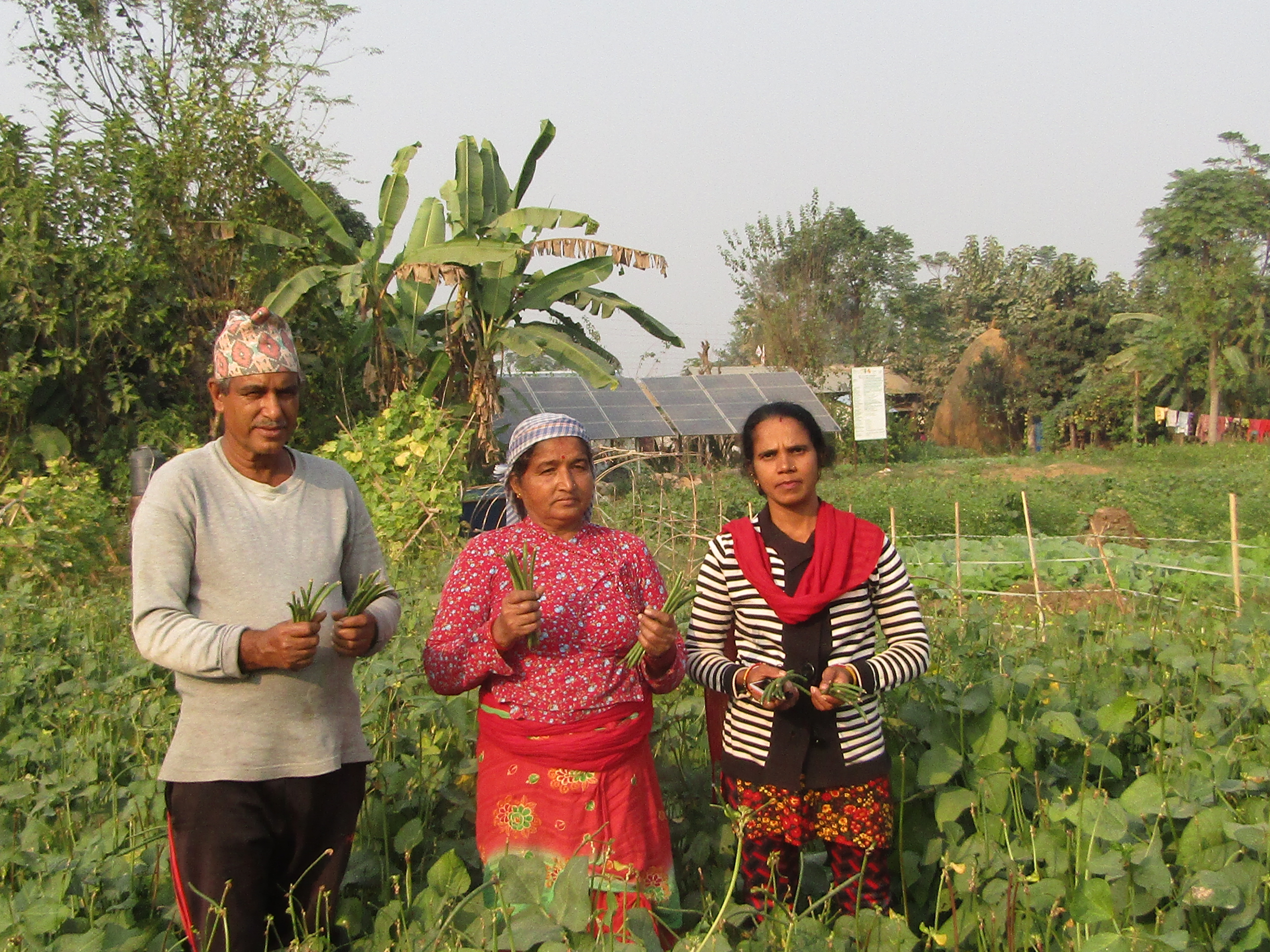
The project is being implemented because the local community identified drinking water and small-scale household agriculture water supply as the most serious resilience challenge during LAPA preparation. Women and children are carrying a disproportionate burden of water collection. The municipality depends heavily on a single tube well and the community lacks reliable, decentralised water access in the settlement. At the same time, the endangered traditional dug well at Bhulke Shivamandir has active recharge potential, which creates a practical opportunity to restore a climate resilient, low cost, nature-based water system. The project is helping to restore and protect this 50-year-old traditional dug well, which will improve safe and sustainable drinking water access for marginalised households, and combine nature-based solutions, solar energy, and automated water management to strengthen local climate resilience. The initiative is designed to reduce dependence on deep boring and to create a decentralised, climate-friendly water supply system.
The primary beneficiaries are more than 35 marginalised households in Khola Tol, Ward No. 4 of Karjanha Municipality. The project involves Karjanha Municipality as the nodal agency with the local NGO SABAL Nepal as the implementing partner. The municipality has committed to supporting land access, technical supervision, and long-term integration of the restored drinking water facility into its service system for sustaining the activity beyond project period.
Sri Lanka Programme
Sri Lanka faces growing climate risks, including floods, landslides, droughts, and extreme weather events, which increasingly threaten urban infrastructure, ecosystems, and vulnerable communities. These risks vary across regions, with municipalities in hilly areas facing distinct challenges compared to coastal and lowland areas, highlighting the need for context-specific resilience planning. CDKN Asia is supporting two cities of Nuwara Eliya and Kandy to develop climate adaptation plans that integrate ecosystem-based adaptation and gender equality and social inclusion principles. Through these plans, the programme aims to strengthen institutional capacity, support evidence-based decision-making, and enable effective climate-resilient development tailored to local needs and priorities.
For the preparation of the Local Climate Adaptation Plans in the two cities, CDKN Asia provided technical assistance to the city staff to conduct baseline assessments, climate risk and vulnerability assessments, and prepare a list of prioritised adaptation actions. An inclusive approach was followed in preparing the Local Climate Adaptation Plan. Focus group discussions were carried out in every ward of Nuwara Eliya. Local communities, including women, the elderly, and marginalised communities, participated in consultations for vulnerability assessment. A similar process was followed in Kandy, where discussions were conducted both at the individual ward level and across clusters of wards. In Nuwara Eliya, 123 community members were consulted, including 70 women and 50 men, while in Kandy, 71 community members were consulted, including 35 women and 36 men. The findings from these were then reviewed by the climate core team and local councillors facilitated by CDKN Asia. Based on this, a list of adaptation interventions was subsequently developed.
Knowledge to action: Integrated solid waste management improvement project for estate divisions within Nuwara Eliya, Sri Lanka
Nuwara Eliya is a highland city in central Sri Lanka, known for its beautiful tea gardens. Often referred to as “Little England,” it developed during the colonial period as a planned hill station and remains a key centre of the country’s tea plantation economy. Several tea estates within the city face persistent infrastructure and service delivery gaps, particularly in solid waste management. High-density settlements, limited land availability, and weak integration with municipal systems have resulted in open dumping that leads to blockage of drains. Increasing rainfall intensity and extreme weather events are exacerbating flood risks, especially where waste obstructs drainage and waterways.
The project aims to improve solid waste management in four estate divisions within Nuwara Eliya by establishing garbage collection units for segregated waste, strengthening municipal collection systems, and supporting community awareness on waste segregation for long term sustainability. The initiative also aims to reduce open dumping, protect drainage and waterways, and improve climate resilience in estate settlements.
The main beneficiaries are the residents of the four tea estate divisions - Scrub, Bambarakelle, Naseby, and Moon Plains. The initiative is being implemented by the Nuwara Eliya Municipal Council with support from the Federation of Sri Lankan Local Government Authorities. The communities and estate management authorities are engaged through the Estate Infrastructure Development Committee which will help to institutionalise the management and monitoring of the project. Technical designs and cost estimates for the waste segregation units have been developed, and the Nuwara Eliya Municipal Council has committed to integrating estate waste collection into its municipal solid waste management system.
Programme outputs
- Policy brief: Scaling green bonds for local climate action in Nepal (forthcoming)
- Policy brief: Harnessing nature for urban resilience: Integrating NbS into development planning in Bangladesh (forthcoming)
Contact
For more information, please contact Bedoshruti Sadhukhan, Associate Director at ICLEI South Asia, on e-mail shruti.sadhukhan@iclei.org.