
Building a circular economy: Transforming Ghana's e-waste crisis
Building a circular economy: Transforming Ghana's e-waste crisis
This blog by Khiddir Iddris, a fellow collaborating with CDKN, explores Ghana's urgent e-waste crisis, highlighting both the environmental dangers and the untapped economic potential within its informal recycling sector. The article is based on the author’s ongoing research conducted across Ghana's major e-waste processing sites. It presents a compelling case for building a sustainable, circular economy that empowers local workers and positions Ghana as a regional leader in climate-resilient waste management.
Introduction
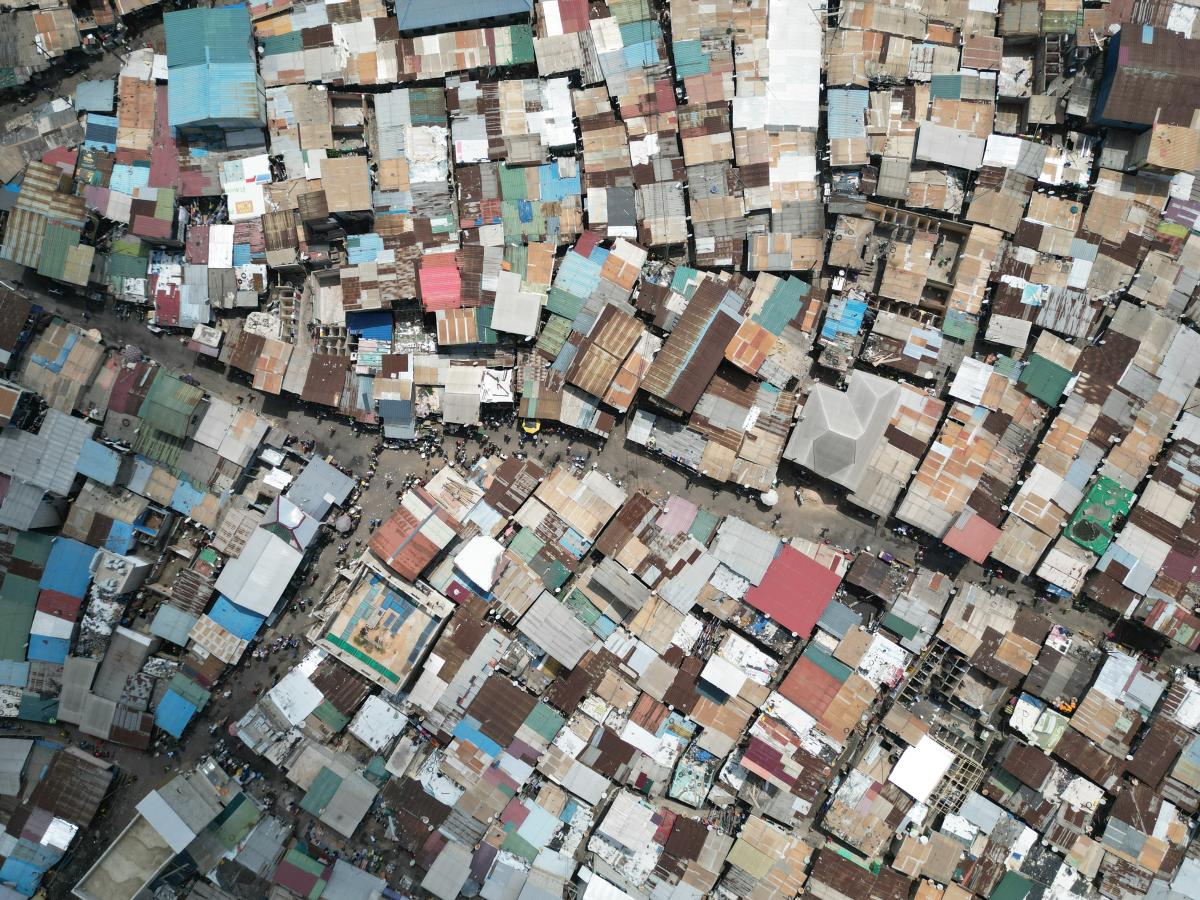
In the bustling markets of Agbogbloshie, Accra, thousands of workers navigate through towering piles of discarded electronics daily. This informal e-waste recycling hub, often called the world's largest electronic waste dump, simultaneously represents an environmental challenge and an economic opportunity that Ghana, like many developing nations, must urgently address through innovative, locally driven solutions.
This article draws on ongoing research conducted across Ghana’s major e-waste processing sites, including Agbogbloshie, Mortuary Road, Ashaiman, and Ashaiman New Town. The insights shared here are grounded in extensive engagement with e-waste workers and community leaders who generously contributed their experiences and expertise. Their voices and perspectives form the foundation of this exploration into how Ghana can transform its e-waste challenge into a model of sustainable, circular development.
The scale of the challenge
Ghana processes approximately 215,000 tonnes of e-waste annually, with 85% coming from domestic sources and 15% from imports. Ongoing research across four major e-waste sites, Agbogbloshie, Mortuary Road, Ashaiman, and Ashaiman New Town, reveals a complex web of interconnected challenges spanning economic, health, environmental, and social dimensions.
The data tells a worrying story: workers in e-waste recycling face severe health risks from air pollution (scoring 228 out of 400 in our assessment), while also grappling with unpredictable incomes and lack of formal recognition and respect. Increased e-waste generation also results in environmental degradation through soil contamination. These socio-economic and environmental risks require urgent intervention.
Beyond the challenges: A thriving ecosystem
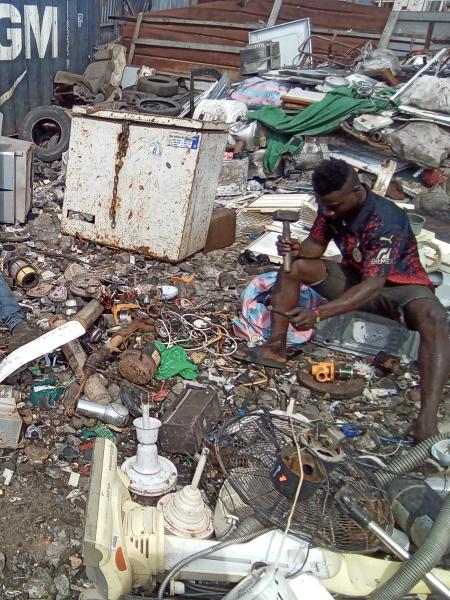
Despite these obstacles, Ghana's e-waste sector supports thousands of livelihoods through an intricate network of stakeholders. Our stakeholder mapping reveals eight key player categories:
Primary value chain actors:
-
Collectors and pickers who gather discarded electronics
-
Dismantlers who break down devices for valuable components
-
Traders and wholesalers managing component markets
-
Recyclers transforming materials into marketable commodities
Essential support network:
-
Transporters moving materials between sites
-
Cart pushers facilitating collection
-
Repairers extending device lifecycles
-
Food vendors sustaining the workforce
This ecosystem demonstrates remarkable resilience and entrepreneurial spirit, processing complex electronic waste streams with minimal formal support.
Climate change connections
E-waste management sits at the intersection of climate adaptation and mitigation. Poor waste management exacerbates environmental degradation, making communities more vulnerable to climate impacts. Conversely, effective e-waste recycling reduces the need for new material extraction, supporting global emission reduction goals.
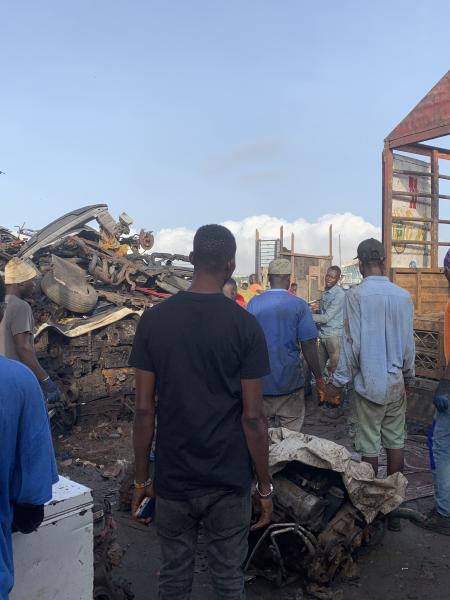
Ghana's e-waste workers are inadvertently climate heroes, recovering valuable metals that would otherwise require energy-intensive mining. However, their methods, often involving open burning, release greenhouse gases and toxic pollutants, highlighting the urgent need for cleaner technologies. Despite their vital role in recovering materials and reducing waste, e-waste workers are often stigmatised as polluters or informal labourers operating outside the law. This perception overlooks the reality that they are providing essential environmental services — recycling, resource recovery, and repair — often without institutional support or recognition. Reframing their work as part of Ghana’s green and circular economy is crucial to shifting public attitudes and policy approaches. These workers are not the cause of the problem but a key part of the solution, embodying the innovation and resilience needed for sustainable transformation.
The path forward
Addressing Ghana's e-waste challenge requires multi-level policy innovation:
National level:
-
Comprehensive e-waste legislation establishing producer responsibility schemes
-
Investment in clean technology infrastructure
-
Skills development programs for informal workers
-
Health insurance coverage for e-waste workers
Local level:
-
Designated e-waste processing zones with proper facilities
-
Waste collection and sorting systems
-
Community-based environmental monitoring
-
Support for worker cooperatives and formal business development
Regional and international:
-
Bilateral agreements on e-waste trade
-
Technology transfer partnerships
-
Capacity-building programs
-
Regional standards harmonisation
Success stories and innovations
Emerging innovations offer hope. Local entrepreneurs are developing cleaner dismantling techniques, while NGOs facilitate skills training and health interventions. Government initiatives like the National E-waste Strategy provide policy frameworks, though implementation remains challenging.
Small-scale success stories include community-based collection schemes, worker health clinics, and pilot projects demonstrating safer processing methods. These initiatives show that locally driven solutions, when properly supported, create positive change.
Building a circular economy
Ghana's path forward lies in transitioning from linear "take-make-dispose" models to circular economy approaches that, design out waste through extended producer responsibility, keep materials in use longer through repair and refurbishment and regenerate natural systems through proper waste processing.
This transition requires coordinated action from government, private sector, civil society, and international partners. Success depends on recognising e-waste workers as valuable partners rather than problems to be solved, and on dismantling the misplaced stigma that has long obscured their contributions to Ghana’s sustainability journey.
Recommendations for policymakers
-
Formalise the informal sector through registration, training, and support services
-
Invest in infrastructure including collection systems, processing facilities, and health services
-
Strengthen regulations while ensuring enforcement doesn't criminalise existing livelihoods
-
Promote innovation through research partnerships and technology transfer
-
Engage communities as partners in solution design and implementation
Conclusion
Ghana's e-waste challenge is not insurmountable. With proper policy support, investment in clean technologies, and recognition of existing expertise, the country can transform its e-waste sector from an environmental liability into a model of sustainable development.
The time for action is now. As electronic consumption continues growing across Africa, Ghana can lead regional innovation in sustainable e-waste management. Success here will create jobs, protect health, preserve the environment, and contribute to global climate goals, demonstrating that developing nations can pioneer solutions to 21st-century challenges.
The workers of Agbogbloshie and beyond deserve nothing less than a future where their essential work is recognised, supported, and properly rewarded. Their transformation is Ghana's transformation, and the world is watching.