Projects

Projects

Completed
Project
Completed
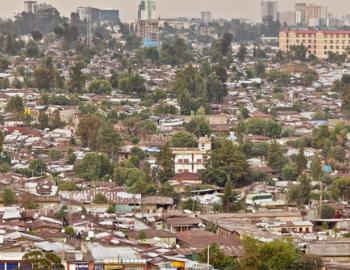
Project : Ecosystems-based approaches to building resilience in urban areas: Making the case for a framework for smart decision-making criteria

Ecosystem-based adaptation is listed in the Durban Adaptation Charter as a priority action for local and sub-national governments. This project brings together urban practitioners, policy makers and the scientific community/leading thinkers to draft a “framework” for smart decision-making criteria around Ecosystem-based Adaptation (EbA) and ecosystems management for Disaster Risk Reduction (DRR).

Completed
Project
Completed
Project : Understanding climate diplomacy

This project aims to understand how climate change can be effectively integrated into foreign policy and to recommend what role CDKN can play.

Completed
Project
Completed
Project : Building the climate resilience of the coffee value chain in Uganda through stakeholder dialogues

This project will provide an innovative platform for dialogue on climate risk management among actors along the Ugandan coffee value chain, from production to export. The overall goal is to support the mainstreaming of climate risks into agriculture value chains in Uganda to promote the sustainable and equitable growth.

Completed
Project
Completed
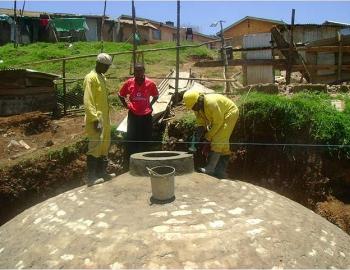
Project : Using climate finance to upscale the Ethiopian National Biogas Programme – a biogas NAMA

This project developed a Nationally Appropriate Mitigation Action (NAMA) for the Ethiopian Biogas sector that explores options to upscale the National Biogas Programme through access to international climate finance.

Completed
Project
Completed
Project : Energy, Ecodevelopment and Resilience in Africa (EERA)

The Energy, Ecodevelopment and Resilience in Africa (EERA) project will develop national energy strategies in Benin, Mali and Togo that take into account the impacts of climate change while meeting other development goals.

Completed
Project
Completed
Project : LDC Policy Paper Series

Climate change is one of the most complex issues addressed by humanity.

Completed
Project
Completed
Project : Quisqueya Dialogue

This project will create a capacity building hub on the island of Hispaniola to increase capacity in the Dominican Republic and Haiti.

Completed
Project
Completed
Project : Reframing Rio

The Reframing Rio project aims to increase global public engagement and trigger new global debates around sustainable development in the lead-up to, and beyond, the Rio +20 meeting in June 2012.

Completed
Project
Completed
Project : Subnational climate compatible development - Learning from CDKN’s experience

CDKN is working on a range of initiatives to share learning from our programme to date. One of these is an initiative to capture and synthesise lessons learned from our work at the sub-national level in developing countries.

Completed
Project
Completed
Project : Supporting risk-based decision-making in the Caribbean (CARIWIG)

The CARIWIG project aims to provide unbiased, locally relevant information on the weather impacts of climate change for a range of time horizons.

Completed
Project
Completed
Project : Payments for environmental services as a driver of climate compatible development

Cooperative agreements for ecosystem services have become increasingly important tools for reducing conflicts. These agreements include voluntary cooperation, corporate-private agreements and Payments for Environmental Services (PES – also known as Payments for Ecosystem Services). Countries as diverse as Costa Rica, Mexico, and China are using national tax revenues to pay citizens to conserve forests and natural vegetation. National forest conservation PES schemes seem perfect precursors for national REDD (Reduced Emissions from Degradation and Deforestation) schemes given their economies of scale for equitable disbursement of benefits to providers of public goods.

Completed
Project
Completed
Project : Community resilience and valuing ecosystem-based adaptation approaches for disaster risk reduction in Fiji

The Pacific Island nations, consisting of many low-lying islands or areas with large population and infrastructure concentrations in the coastal zone, are at risk of climate-related disasters such as extreme weather events and sea-level rise. As many Pacific Island nations rely on their natural capital, the impact of climate-related disasters on their ecosystems and actions taken to mitigate climate risks are critical to the on-going resilience of their populations.