Accessibility links

SREX: Lessons for the Health sector

The Special Report on Managing the Risks of Extreme Events and Disasters to Advance Climate Change Adaptation (SREX) was commissioned by the Intergovernmental Panel on Climate Change (IPCC) in response to a recognised need to provide specific advice on climate change, extreme weather and climate events (‘climate extremes’). The SREX report was written over two and a half years, compiled by 220 expert authors, 19 review editors and taking account of almost 19,000 comments. It went through three rigorous drafting processes with expert and government review. The findings were approved by the world’s governments following a four-day meeting, where the Summary for Policy Makers was agreed. It thus provides the most complete scientific assessment available to date and describes the immediate and long-term action required to manage the risks we face. It comprises a policy summary released in November 2011 and the full report released in March 2012 (available online at http://ipcc-wg2.gov/srex).

This thematic brief summarises the key findings of the report relevant to health. It includes an assessment of the science and the implications for society and sustainable development. It is intended to be useful for policy-makers, decision takers and planners, locally, nationally and regionally. In recognition that these readers will have many competing calls on both their time and budgets, this brief seeks to highlight key thematic findings and learning from SREX. It makes suggestions for immediate action to avoid further damage from climate extremes and to build a more resilient future with benefits that go beyond health.

Although not an official publication of the IPCC, this summary has been written under the supervision of co-authors of the SREX report and it has been thoroughly reviewed by an expert panel. The summary includes material directly taken from the SREX report, where the underlying source is clearly referenced, but it also presents synthesis messages that are the views of the authors of this summary and not necessarily those of the IPCC. It is hoped that the result will illuminate the SREX report’s vital findings for decision makers working on health issues, and so better equip them to make sound decisions about managing disaster risk in this context .This brief is one of four thematic briefs of the SREX report – on water, health, agriculture and ecosystems – that can be read individually or as a suite. There are also three regional SREX summaries for Africa, Asia, and Latin America and the Caribbean, which provide further information as a rapid reference source.

SREX considered the effects of climate change on extreme events, disasters, disaster risk reduction (DRR) and disaster risk management (DRM). It examined how climate extremes, human factors and the environment interact to influence disaster impacts and risk management and adaptation options. The report considered the role of development in exposure and vulnerability, the implications for disaster risk and DRM, and the interactions between extreme events, extreme impacts, and development. It examined how human responses to extreme events and disasters could contribute to adaptation objectives, and how adaptation to climate change could become better integrated with DRM practice. The report represents a significant step forward for the integration and harmonisation of the climate change adaptation, disaster risk management, and climate science communities.

For public health policy-makers and planners, or indeed anyone whose work contributes to public health, this brief should prompt discussion and understanding of several questions:

1) Why are extreme events a critical public health issue?

2) How is public health affected by the risk of extreme events?

3) What actions can be taken to manage these risks?
What do the SREX findings mean for the health sector?

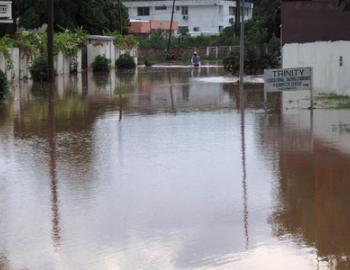
A changing climate leads to changes in the frequency, intensity, spatial extent and duration of weather and climate events, and can result in unprecedented extremes. This will have a direct impact on people’s security, livelihoods and health in future, including through increased length, frequency and/or intensity of heatwaves, increased frequency of heavy precipitation in many regions, intensified droughts across some areas, upward trends in extreme coastal high water levels, and changes in flood patterns. Extreme events such as floods can cause deaths, injuries and disability, and can be followed by infectious diseases (such as cholera), and malnutrition due to crop damage and disruption of food supply. Other health impacts of extreme events may be indirect, but long lasting, and are often associated with mental health impacts such as stress, anxiety and depression.

Extreme climate and weather events can also negatively impact the critical infrastructure needed to protect human health. There is high confidence that changes in the climate could seriously affect water management systems,  which will affect sanitation and health. Extreme events may cause failures in hospital or health centre building structures, and can also prevent people accessing health services, for example during a storm or flood.

Those most likely to experience difficulty accessing health services during or after an extreme event are individuals already considered vulnerable with respect to their health – such as children, the elderly, pregnant women, and those who may need additional response assistance including people with disabilities. In addition, as those with the least resources often have low health status and the least ability to adapt, the poor and disenfranchised are also the most vulnerable to climate-related health impacts. Extreme events can therefore exacerbate health inequalities.

Importantly, there are several approaches that planners and policy-makers can take, working with other stakeholders, to help manage the risks presented by climate extremes and disasters and their impact on health infrastructure, services, outcomes and inequalities. These include:

  • assessing risks and maintaining information systems, particularly public health surveillance systems;
  • developing strategies to support coping and adaptation, including building the capacity of communities to prevent, prepare, respond to and recover from extreme events;
  • learning from experience in managing risk;
  • linking local, national and international approaches.

If extreme climate events increase significantly in coming decades, climate change adaptation and disaster risk management are likely to require not only incremental but transformational changes in processes and institutions. This will involve moving away from a focus on issues and events, towards a more holistic approach – for example, integrating health surveillance and early warning systems into development planning and policy-making.

Finally, there must be consideration that in some cases today’s climate extremes will be tomorrow’s “normal” weather. Tomorrow’s climate extremes may therefore stretch our imagination and challenge our capacity to manage change as never before.

To read the entire CDKN report  Managing Climate Extremes and Disasters for the health sector: Lessons from the IPCC SREX Report please download on the right of this page.

, , , , , , ,

Comments are closed.

CDKN Videos