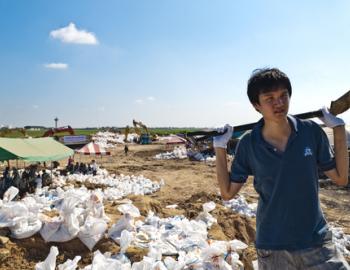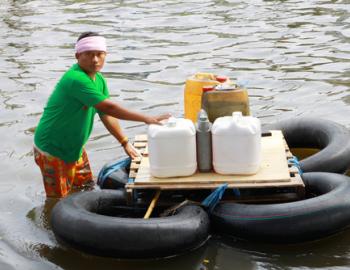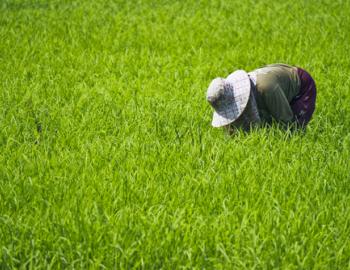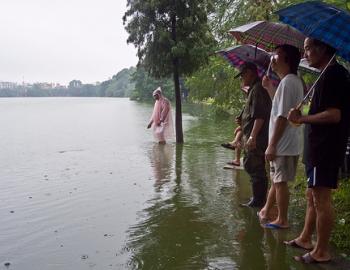
FEATURE: How are perceptions of ‘risk’ formed in the Mekong Delta?
Read more…
Cambodia is considered highly vulnerable to climate change due to its high levels of poverty and lack of infrastructure to cope with natural disasters and other longer-term effects of climate change.
Cambodia emerged in the beginning of the 1990s from decades of conflict, as one of the poorest countries in the world. Thereafter the country’s economic growth has been high and living conditions have improved, but poverty is still widespread. Cambodia is largely a rural economy with a young population and low human development (e.g. health, education) indicators. The key environmental problems in the country include habitat loss and declining biodiversity (in particular destruction of mangrove swamps and declining fish stocks), deforestation, land degradation, and natural hazards and disasters e.g. floods and droughts.
Cambodia contributes little to climate change (GHG emissions) but will be affected by its impacts. Climate change is expected to increase the frequency and intensity of extreme weather events such as floods, droughts and windstorms. Its impact will be felt through changed water flows in the Mekong, altering the unique flood pulse system, and in coastal zones through sea-level rise, increased erosion and salinisation. Almost all provinces in Cambodia are vulnerable to climate change due to their low adaptive capacity and dependence on climate-sensitive livelihoods. The poor depend disproportionally on public goods for their livelihoods, so declining quality of, or access to, natural resources affects them heavily. The poor are also more vulnerable because they have less ability to adapt to climate change.
In order to respond to climate change it is important to link efforts to reduce vulnerability to present climate-related disasters with those aimed at building longer-term resilience to climate change. By increasing society’s capacity to respond and adapt well to climate change, the impacts can be minimised. CDKN is working in Cambodia under the SUMERNET research programme. It is supporting a project communicating water-related climate change risks to improve local adaptation in the Mekong Region.
Population: 14.3 million
Human Development Index ranking: 139/187 countries (2011 HDR)